



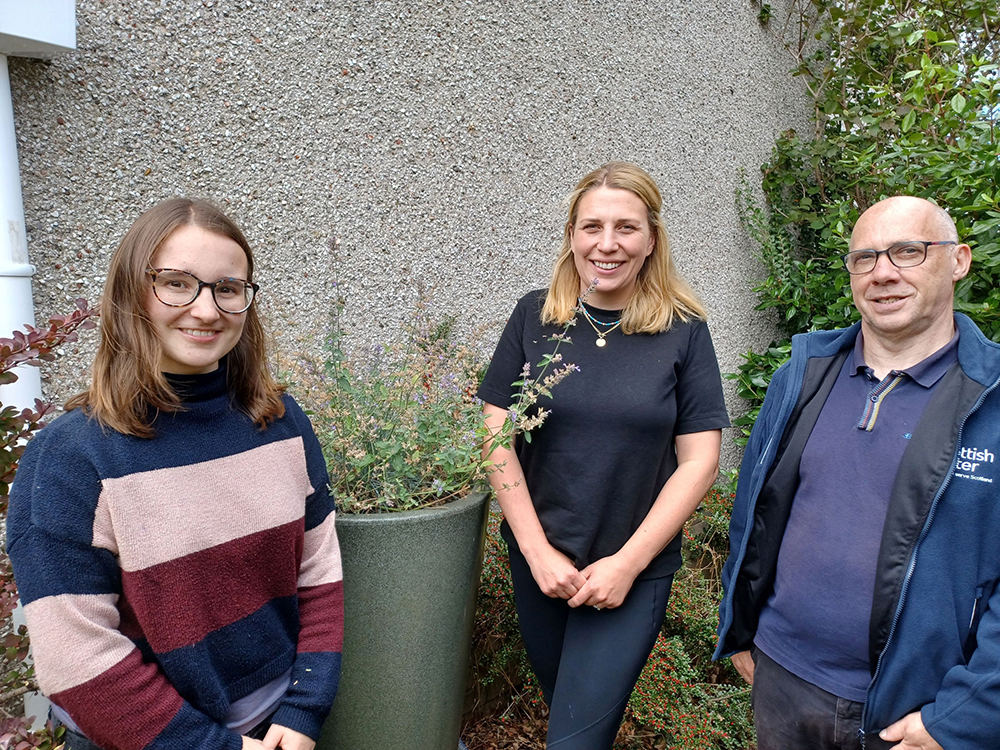
Scottish Water is piloting a project to reduce the risk of flooding in Edinburgh.
have been installed at 27 properties in the Craigleith area, raising awareness of excess rainwater risks among customers.
The work aims to reduce the amount of rainwater entering the urban drainage system during periods of heavy rainfall and is one of two pilot projects delivered by Scottish Water to date.
The water butts and planters capture rainwater running off property roofs, stopping around 1,363m2 of roof area from flowing straight into the sewers – and reduce the flooding risk further downstream.
Scottish Water project manager Ed Ptolomey said: “This pilot is part of a series of work that is being planned and undertaken to tackle flooding issues in the Craigleith area through the Edinburgh and Lothian Strategic Drainage Partnership, of which Scottish Water is a key member.
“We are facing increasing challenges from more frequent and intense rainfall events due to climate change in Scotland.
“By utilising nature-based solutions like these to reduce the amount of rainwater that enters the public sewer system, we can reduce the frequency and severity of flooding from the sewer network when it becomes overloaded.”
He added: “As well as helping to support our traditional infrastructure, these schemes also create attractive green spaces for people and wildlife to make use of.”
Katie Gibson, who had two water butts installed at her home, said: “I was aware that flooding has been an issue within the area over the last two to three years and it is good to see Scottish Water targeting flooding without it being a large-scale infrastructure project.
“I’ve really enjoyed being part of the scheme, it was easy from start to finish and I’ve found it very useful to have access to water in three places in my garden now, not just the outside tap which has made watering my plants easier.
“During the long dry spells this summer, it has also allowed me not to use as much mains water as I otherwise would have.”
She added: “I’m really interested to see how the project does affect flooding in the area.”
Experts at the Royal Botanic Garden Edinburgh (RBGE) chose appropriate planting for the project, to ensure they were beneficial to customers, as well as being visually attractive and resilient to weather conditions.
Isla Kendall, PhD student at RBGE and Heriot Watt University, said: “RBGE scientists and horticulturists collaborated to design planting palettes for residents, that offer biodiversity, beauty, and food-growing benefits. Plants play a crucial role in these systems by helping water soak into the soil and releasing it back into the air through transpiration.”
Feedback from the residents who took part in the project will inform how similar projects are rolled out elsewhere by Scottish Water in the future.