



The UK cannot rely on blood screening alone to address rising concerns about lead exposure in children. It must also identify and remove the sources of dissolved lead entering drinking water from legacy lead pipework. In this article, Ian Crosby, Technical Director at Palintest, sets out the need for a national programme of proactive water infrastructure testing and illustrates how field-based analytical technology can help stakeholders detect lead early and prioritise high-risk pipe replacement to prevent exposure.
The UK is preparing for its first structured screening study of lead exposure in children, following an investigation by the Financial Times which suggests that low-level lead exposure may be more widespread than current monitoring can indicate. At the same time, the UK Health Security Agency (UKHSA) has lowered the intervention threshold for children and pregnant women to 5 µg/dL (micrograms per litre), reflecting the international consensus that there is no safe level of lead exposure. Taken together, these developments represent a significant shift in national public health strategy.
Although clinical detection is vital, it remains a reactive measure. A preventative approach is needed to address one of the most persistent sources of ongoing exposure: dissolved lead in drinking water resulting from legacy plumbing in properties built before 1970. Many such installations remain in daily use across the UK, including homes, schools, nurseries and public buildings.
The Source of Risk: Lead in Drinking Water Systems
Despite decades of regulation, portions of the UK housing and public estate continue to rely on historic water supply connections and internal plumbing containing lead. Water can dissolve low levels of lead from these materials, particularly when it stagnates overnight or when water parameters, such as pH and alkalinity, increase corrosivity.
Lead exposure can occur in any setting, but certain environments present heightened risk, including early years education, maternity and healthcare facilities, as well as social or rental housing where asset data on pipe materials may be incomplete.
In most areas, there is no complete, verified record of which properties still contain lead pipework. This means that, without systematic testing, the UK cannot accurately target pipe replacement where it would have the greatest public health impact.
Public Health Impact
Lead is a cumulative neurotoxin. Even low-level exposure has been associated with reductions in IQ, impaired cognitive development, behavioural and attention difficulties, and adverse birth and pregnancy outcomes. These impacts are irreversible and disproportionately affect communities living in older, less modernised housing stock.
The evidence underpinning the new UKHSA threshold aligns with the World Health Organisation, the revised EU Drinking Water Directive, and Canadian and US guidance recognising that historically accepted limits understated the risks of low-level exposure.
The Policy Direction
The Drinking Water Inspectorate (DWI) has called for a more coordinated national strategy on lead risk, including:
Improved data on the presence of lead in drinking water systems
Integration of water testing with asset risk mapping
Consideration of a move toward a 5 µg/L statutory drinking water standard, already planned in Scotland by 2036
For these changes to deliver meaningful public health protection, the UK requires monitoring tools that enable accelerated identification of priority locations for remediation.
Limitations of Current Testing Approaches
Traditional laboratory analysis using techniques such as ICP-MS remains the reference method for regulatory compliance, but it is not optimised for large-scale screening due to:
Cost per sample
Multi-day turnaround times
Logistics of representative sampling
Limited suitability for rapid intervention decision-making
To support proactive infrastructure management, field-deployable testing is required that is accurate, traceable, and robust enough for screening at scale.
Field-Based Screening with Kemio
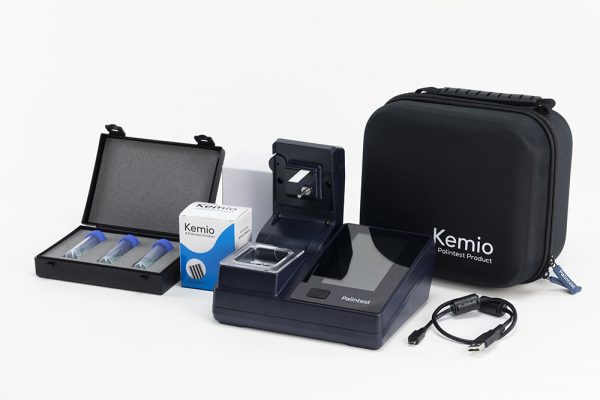
Palintest’s Kemio Heavy Metals testing technology provides rapid, electrochemical analysis of dissolved lead in drinking water, using a method aligned with US EPA Method 1001 (differential pulse anodic stripping voltammetry). Kemio offers:
Results in approximately three minutes
Digital audit trails and data export for compliance and asset mapping
Repeatable and traceable measurement methodology
Detection capabilities below 2 µg/L, suitable for emerging standards
Operation by non-scientists following structured training
Suitability for councils, water networks, consultants, and large estate owners
This enables early identification of elevated dissolved lead levels and supports prioritisation of pipe replacement, filter installation, or corrosion control interventions.
Evidence from Quebec
A notable example of large-scale screening using Kemio is the Quebec schools testing programme in Canada. Authorities required every drinking water outlet across schools and childcare settings to be tested in response to new national guidelines. Kemio was selected due to its testing speed, cost-effectiveness, and suitability for deployment by trained field teams rather than laboratory chemists.
A performance evaluation by the Government of Quebec’s Centre of Expertise in Environmental Analysis concluded that Kemio is appropriate for screening dissolved lead in drinking water and satisfies expected performance criteria for detection limits, linearity, and field robustness.
The approach supported decision-making across thousands of outlets and accelerated the planning and verification of remediation works.
A Dual Approach to Lead Reduction
Realistically, this problem will not be eradicated overnight. However, a comprehensive national lead risk reduction strategy will ensure that the worst-affected buildings and areas are identified and prioritised. That strategy should integrate two parallel components:
1. Medical screening of children and pregnant women where exposure risk is suspected or confirmed, as proposed in the upcoming UK pilot.
2. Proactive environmental screening of drinking water infrastructure to prevent exposure in the first place.
This dual pathway reflects international best practice and avoids a reliance on clinical detection as the first indicator of risk.
Recommended Focus Areas
The team here at Palintest proposes that infrastructure screening should be prioritised in:
Properties built before 1970 where pipe materials are unknown
School and nursery estates, particularly those with intermittent water use
Local authority and housing association portfolios
Areas undergoing lead pipe replacement to verify remediation success
Regions with known historic industrial contamination or soft-water conditions
Addressing Lead Exposure in the UK
The UK is entering a welcome new phase in its approach to lead exposure. Clinical screening will play a vital role, but it must be matched with proactive identification and removal of lead in drinking water systems. Without field-based testing to guide infrastructure decisions, the opportunity to prevent avoidable harm may be missed.
Kemio offers a proven, practical and scalable analytical method that enables organisations to locate, prioritise and verify lead pipe replacement programmes. Palintest stands ready to support national and regional efforts with both technology and technical expertise.
Interested in Kemio? Request a demonstration, with sales@palintest.com