




Chris Payne, PureTec Separations Ltd, explores how water reuse and smarter treatment design can help utilities and industry respond to drought pressures while building long-term resilience.
In January, the United Nations declared that the world has entered an era of “global water bankruptcy”, a state in which many water systems can no longer realistically return to their historical baselines.
It is a stark warning, but one that resonates closer to home. England has just emerged from one of its most severe drought episodes in a generation, following the driest spring in 132 years and the hottest summer since records began.
Several water companies remain on drought alert, and the risk of a return to restriction has not gone away.
For water utilities and industrial operators, the message is clear: resilience can no longer be an afterthought. Across utilities, food and beverage, and other high-water-usage sectors, the challenge is the same.
Reduce dependency on freshwater, increase reuse, and cut operational losses. These challenges are complex, but solutions do exist. And in many cases, they are already delivering results.
Making reuse a practical reality
Historically, wastewater treatment has been designed around safe discharge. Once treated, water is released back into the environment. But as supply constraints grow, this approach is rapidly being re-evaluated.
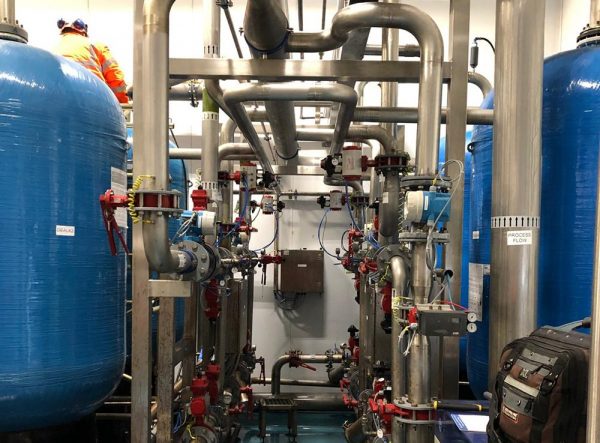
Advanced treatment technologies are now making water reuse viable at both site and network scale. Whether through membrane systems such as reverse osmosis and ultrafiltration, or tailored multi-stage configurations including activated carbon, ion exchange or pH correction, water that would previously be discharged is being recovered and reused.
This is especially valuable in industrial settings, where treated water can be repurposed for washdown, cooling, or even returned to process under the right quality controls. In one recent closed-loop project at a major beverage site, reuse rates of over 93% were achieved, significantly reducing demand on mains supply and helping futureproof the operation against seasonal shortages.
Reuse is not just about sustainability. It delivers measurable operational benefits too: lower incoming water bills, reduced discharge costs, and a smaller carbon footprint through lower pumping and treatment volumes.
Reducing loss through smarter process control
While recovery is essential, so too is prevention. Undetected leaks, inefficient processes and over-specification can all contribute to water loss. By integrating smart monitoring, remote diagnostics, and process optimisation into treatment systems, operators can reduce unnecessary demand on freshwater sources and make better use of what they already have.
A service-led engineering approach, one that includes real-time performance monitoring and predictive maintenance, allows operators to catch inefficiencies before they lead to waste. This is especially important as climate events become more extreme and variability in supply puts additional pressure on ageing infrastructure.
Leak detection and process stability may not make headlines, but their impact on water resilience is significant. When flow is monitored, valves are maintained, and chemical dosing is precise, the system stays balanced and efficient, reducing the overall volume of water needed to achieve the same operational outcome.
Local manufacturing and the circular water economy
One often-overlooked contributor to water resilience is how treatment systems themselves are built and supplied. UK-manufactured systems offer several advantages in today’s climate-aware context. They shorten supply chains, improve service response times, and reduce the embedded emissions associated with transporting and replacing critical assets.
But there is also a broader benefit. Locally designed systems can be configured more precisely to the chemical, regulatory and environmental conditions of the UK’s water landscape. That includes tighter control over backwash volumes, energy usage, and system integration, all of which support the principles of a circular water economy.
The more circular a site becomes, the more resilient it is to external shocks. That means being able to recycle water, recover value, and keep operations running even in the face of restriction or scarcity. Sustainability and reliability are not competing objectives – they reinforce one another.
Building future-ready water systems
As the UN’s water bankruptcy report makes plain, this is no longer a hypothetical risk. For the water sector, it raises urgent questions about how we treat, reuse, and manage water at every stage of the cycle.
Advanced treatment technologies, smarter system design, and UK-built solutions are already helping address this challenge. But the window for passive progress is closing. Proactive investment in water reuse and process efficiency needs to become a business-critical strategy, not a nice-to-have, but a non-negotiable part of long-term planning.
The technology exists. The economic case is clear. What the sector needs now is the willingness to act on both.