




Reliable water quality monitoring is becoming increasingly important across treatment plants, distribution networks and industrial water systems. Instead of relying only on laboratory testing, many operators now want simple, continuous measurement directly in the process so they can react quickly to changes. Optical sensing, particularly ultraviolet (UV) measurement, is widely used because it can monitor water without chemicals or manual sampling and provides a fast indication of contamination and treatment performance.
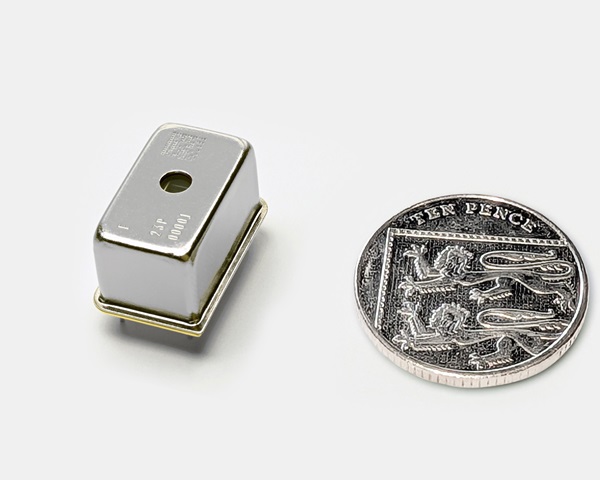
For applications that need flexible measurement, the Hamamatsu C16767MA spectrometer head allows UV analysis to be built directly into compact monitoring equipment. The device is extremely small, measuring just 20.1 × 12.5 × 10.1 mm and weighing 5 g, so it can be integrated into portable instruments, pipe-mounted analysers or field probes.
It operates across a spectral response range of 190 to 440 nm, covering the UV wavelengths commonly used in water monitoring. Changes in UV absorption are often used as an indicator of organic content and general water quality, as well as helping operators check treatment effectiveness. The unit provides high sensitivity and a maximum spectral resolution of 8 nm, allowing consistent monitoring and comparison of readings over time. The spectral resolution was also improved to a typical value of 5.5 nm (FWHM) by shrinking the groove spacing to approximately 500 nm which is half that of conventional groove spacing.
Where a fixed measurement at a specific wavelength is required, a dedicated photodiode can be used instead of a full spectrometer. The Hamamatsu S12742-254 is designed for detection at 254 nm, a wavelength commonly monitored in water treatment. Many organic substances absorb strongly at this wavelength, so measuring it can provide a simple indication of water quality and UV treatment performance.
The device is a silicon photodiode with a built-in band-pass filter and is sensitive only to monochromatic light with a narrow response wavelength half width (FWHM) at 10nm reducing stray light and improving measurement accuracy. It offers high UV sensitivity, low capacitance and high reliability, supporting long-term operation in fixed monitoring installations. Versions can also be configured for other peak sensitivity wavelengths such as 220nm or 275nm if different measurement parameters are required.
In water monitoring stations, several parameters are typically measured continuously to assess environmental condition and detect pollution events. These commonly include dissolved oxygen levels, temperature, pH, turbidity, ammonia concentration, nitrates and organic matter content. Organic matter is often assessed using UV254 measurement, making optical sensors particularly useful within multi-parameter monitoring probes. Some parameters are also monitored in the visible region, where a visible-range spectrometer such as the C12880MA can be used. By combining optical UV measurement with conventional electrochemical sensors, monitoring systems can provide a more complete picture of water quality and allow early identification of contamination.
Together, the two sensors support different approaches to water monitoring. The C16767MA enables broader UV measurement across multiple wavelengths, while the S12742-254 provides precise single-wavelength detection at 254 nm. This allows equipment manufacturers to design compact systems for continuous water quality monitoring, helping operators track changes in water condition and verify treatment processes.
For more information: https://www.hamamatsu.com/eu/en.html