




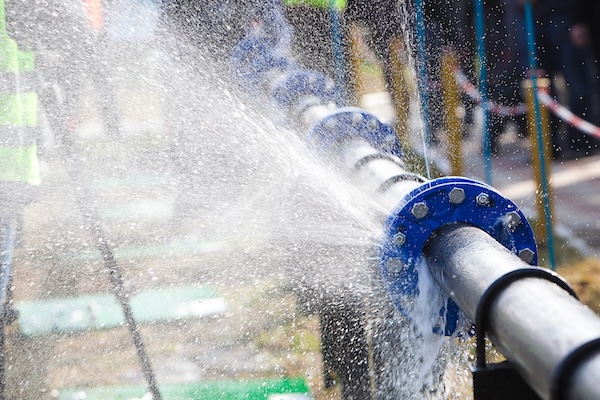
Across the UK water sector, operational teams respond quickly and effectively to incidents.
Issues are investigated, actions are implemented and systems are restored. In many cases, these responses are appropriate and necessary to maintain service and reduce risk.
However, a more subtle pattern often emerges over time.
A problem is identified and addressed in one location.
A solution is implemented and the issue appears resolved.
Months later, a similar issue arises elsewhere in the network.
A different team investigates it and implements a similar solution – often without knowing it has already been tried before.
In some cases, the same type of response is applied repeatedly across different locations, despite limited evidence that it has been effective.
The illusion of resolution
At an individual level, incidents can appear to be resolved successfully.
The immediate issue is addressed, operations return to normal and the investigation is closed. This creates a sense of completion.
But local resolution does not always mean the underlying issue has been effectively addressed.
Without visibility of how similar solutions have performed elsewhere, it is difficult to know whether an intervention has genuinely reduced risk or simply addressed the immediate symptom.
When learning is not shared
One of the key challenges is not the absence of investigation, but the absence of shared insight into outcomes.
Investigation findings, actions and follow-up results are often recorded within specific teams, systems or reports. While this captures valuable information, it does not always allow organisations to answer critical questions such as:
- Have we seen this issue before?
- What solutions were implemented previously?
- Did those solutions actually prevent recurrence?
Without this feedback loop, organisations risk repeating not only the same problems, but also the same ineffective responses.
Variation without validation
When similar issues are addressed independently across different locations, solutions can vary significantly.
Some interventions may be effective.
Others may have limited impact.
In many cases, the long-term effectiveness of actions is not clearly understood.
This creates a situation where different parts of the organisation are effectively experimenting with solutions – but without a shared understanding of the results.
Over time, this leads to duplicated effort, inconsistent outcomes and missed opportunities to address root causes more effectively.
From isolated fixes to informed action
Breaking this cycle requires a shift from isolated problem-solving to shared, evidence-based learning.
This involves not only understanding the causes of incidents but also tracking the effectiveness of the actions taken in response.
Root Cause Analysis provides a structured way to understand causes. However, its full value is realised when insights – including the effectiveness of interventions – are visible across the organisation.
As expectations around environmental performance and operational resilience continue to increase, several water companies are exploring more connected approaches to RCA to support this capability.
Looking ahead
Operational teams will always need to act quickly to resolve issues as they arise.
But preventing ineffective solutions from being reapplied requires organisations to go further.
It requires the ability to understand not only what happened, but also what has been tried before – and whether it worked.
When that insight is shared, organisations move from repeated response to informed action.
Author
Jonathan Batchelor is CEO of What Caused This, a company developing digital Root Cause Analysis platforms used by organisations investigating complex operational and environmental incidents.
More information:
https://whatcausedthis.com/
Further information about Root Cause Analysis for water companies:
https://whatcausedthis.com/rca-software-for-water-companies/