




I spend a lot of my time talking to people about causes.
I’m not a water scientist or an engineer. My interest is Root Cause Analysis and, specifically, what happens when we investigate events occurring in conditions that may be very different from those we have experienced before.
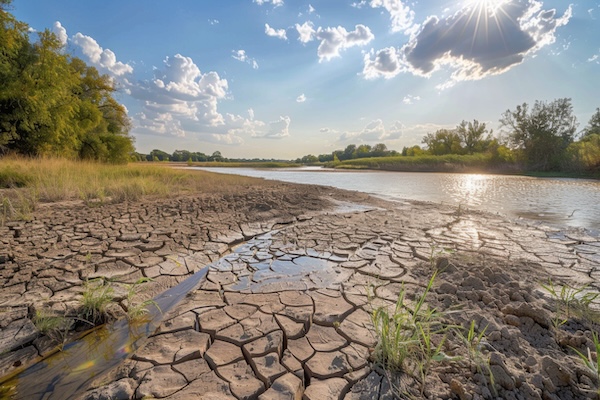
Working with teams across the water industry, those conversations are increasingly taking place against a backdrop of very unusual conditions. As of 4 September, England is experiencing its third drought in five years. More than 30 million people are under water restrictions, summer 2026 was England’s hottest on record, and July was the driest July in 190 years.
A water scientist recently made a fascinating observation to me. Prolonged dry weather can create different ground conditions around buried infrastructure, potentially placing unusual stresses on the network. Ofwat similarly recognises that as ground dries and shrinks during hot weather, additional stress can be placed on water mains.
It got me thinking. If a pipe bursts tomorrow, it might look very similar to a pipe burst five years ago. But does that mean it happened for the same reasons? Perhaps so, perhaps not.
One of the great strengths of any experienced organisation is its accumulated knowledge. Engineers, scientists and operators know their systems. They have seen things fail before. They recognise patterns and understand established failure modes, and we absolutely want that experience in an RCA.
But there is also a risk. We need to be careful that experience doesn’t determine the answer before the investigation has properly started. When something familiar happens, there is a natural temptation to look for familiar causes. Yet unprecedented conditions may create new causes, or unique combinations of causes, that we haven’t encountered before.
This is where the famous idea of the “unknown unknowns” becomes particularly relevant.
An unknown cause doesn’t necessarily mean some completely new phenomenon. Ground movement isn’t new. Ageing infrastructure isn’t new. High demand isn’t new. Changes in pressure aren’t new. But what if several familiar factors start interacting differently because the conditions surrounding them have changed?
That is exactly why effective RCA must be led by evidence rather than expectation.
Instead of asking, “Which of the things we already know about caused this?”, perhaps we should start with a much more open question: “What actually had to be true for this event to happen?”
It’s a small shift that can make a significant difference. Or put another way, as environmental conditions become more unusual, we cannot assume that yesterday’s explanation will explain tomorrow’s event.
For me, this is where Root Cause Analysis becomes much more than a process for explaining what went wrong. Done properly, it is a way of learning something new about the system itself.
And sometimes the most important cause we discover will be the one we didn’t even know we were looking for.
Author
Ed Wells is Chief Strategy Officer at What Caused This, the platform organisations use when decisions really matter.
More information: whatcausedthis.com