




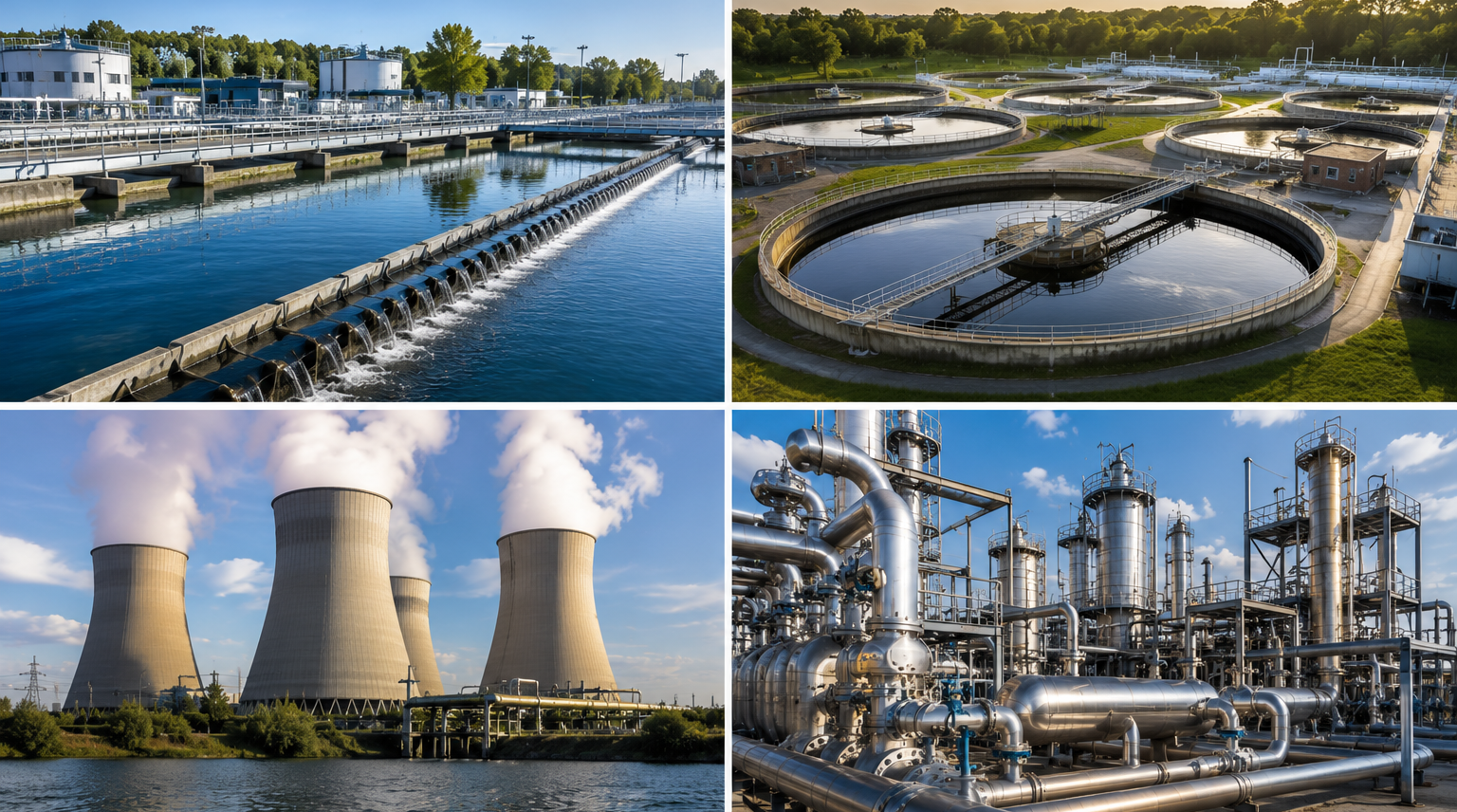
Chemical dosing may only be one part of a water treatment installation, but its performance has consequences in so many areas, particularly water quality, chemical use, compliance and asset reliability. At Liquid Metering Instruments (LMI), we provide a dosing pump portfolio that combines proven engineering, exceptionally broad application coverage and practical UK support.
For drinking-water treatment, the LMI PD Series provides straightforward metering, with manual and enhanced control options. The Enhanced model adds calibration assistance and StayPrime degassing technology. Where operators require process intelligence, Proteus delivers ±1% steady-state accuracy, a 1000:1 turndown ratio, real-time connectivity and liquid-end materials selected for demanding chemicals.
Across wastewater and sewerage treatment, these capabilities support dosing for pH correction, disinfection and sludge conditioning, including acids, alkalis, sodium hypochlorite and liquid polymers. In cooling-water systems, our pumps introduce corrosion inhibitors, biocides and antifoaming agents. They are equally suited to scale and corrosion control in hot-water and steam-water circuits.
For higher-capacity or higher-pressure duties, our Milton Roy G, mRoy and MaxRoy ranges provide rugged industrial performance. MaxRoy offers flows up to 1,110 litres per hour at pressures up to 28 bar, while mRoy reaches pressures up to 123 bar. Both use hydraulically actuated diaphragm technology and are engineered for long service life.
Our advantage extends beyond the pump. Since 1980, LMI has provided stocked equipment, bespoke dosing systems, installation, commissioning, maintenance and repair. From one metering pump to a fully automated package, we supply the precision, resilience and expertise that critical water processes demand every day.
Find our more at www.lmipumps.co.uk.