




By Hansani Wahalathanthrige and Ian Williams, University of Southampton.
Bioaugmentation in wastewater treatment is the targeted introduction of pollutantdegrading or functionally specialised microbes into wastewater systems to increase removal rates, restore failing biological processes, or add capabilities that the native community lacks.
The objective is to accelerate biodegradation, stabilise treatment performance and reduce reliance on chemical or mechanical interventions.
In practice, bioaugmentation promises targeted fixes for stubborn pollutants, but seeded strains often wash out, fail to colonise and lose the race with indigenous microbes.
The result is costly, shortlived gains and repeated interventions that undermine the economic case for biological solutions.
Our recently published review reframes the problem by identifying immobilisation as the missing link. Immobilisation need not rely on synthetic carriers such as plastics or gels; instead, other microbes can act as natural scaffolds.
Certain bacteria coaggregate, secrete extracellular polymeric substances and physically integrate functional degraders into stable biofilms and aerobic granules.
This biological scaffolding improves retention, increases resilience to operational shocks and delivers far higher removal rates across a wide range of pollutants, from phenolic compounds to micropollutants and metals.
For operators and engineers, the practical implications are clear. Aggregation outperforms washout because coaggregation with bridging strains converts fragile planktonic inocula into persistent biofilm partners.
Aerobic granules are a ready source of such bridging organisms: microbes from inner granule layers show superior adhesion and can seed immobilisation without external carriers.
The underlying mechanisms are actionable; celltocell signalling systems such as quorum sensing and the cyclic diguanosine monophosphate signalling pathway drive extracellular polymeric substance production and irreversible adhesion, and these pathways can be monitored and, in some cases, tuned.
Laboratory studies support the approach: pairing degraders with aggregators has produced removal improvements from roughly seventy to eighty percent up to greater than ninetynine percent in controlled trials.
We can translate these findings into nearterm practice by following a systematic programme.
First, screen for aggregating strains at fullscale plants by sampling aerobic granules and established biofilms and prioritise isolates with high coaggregation performance.
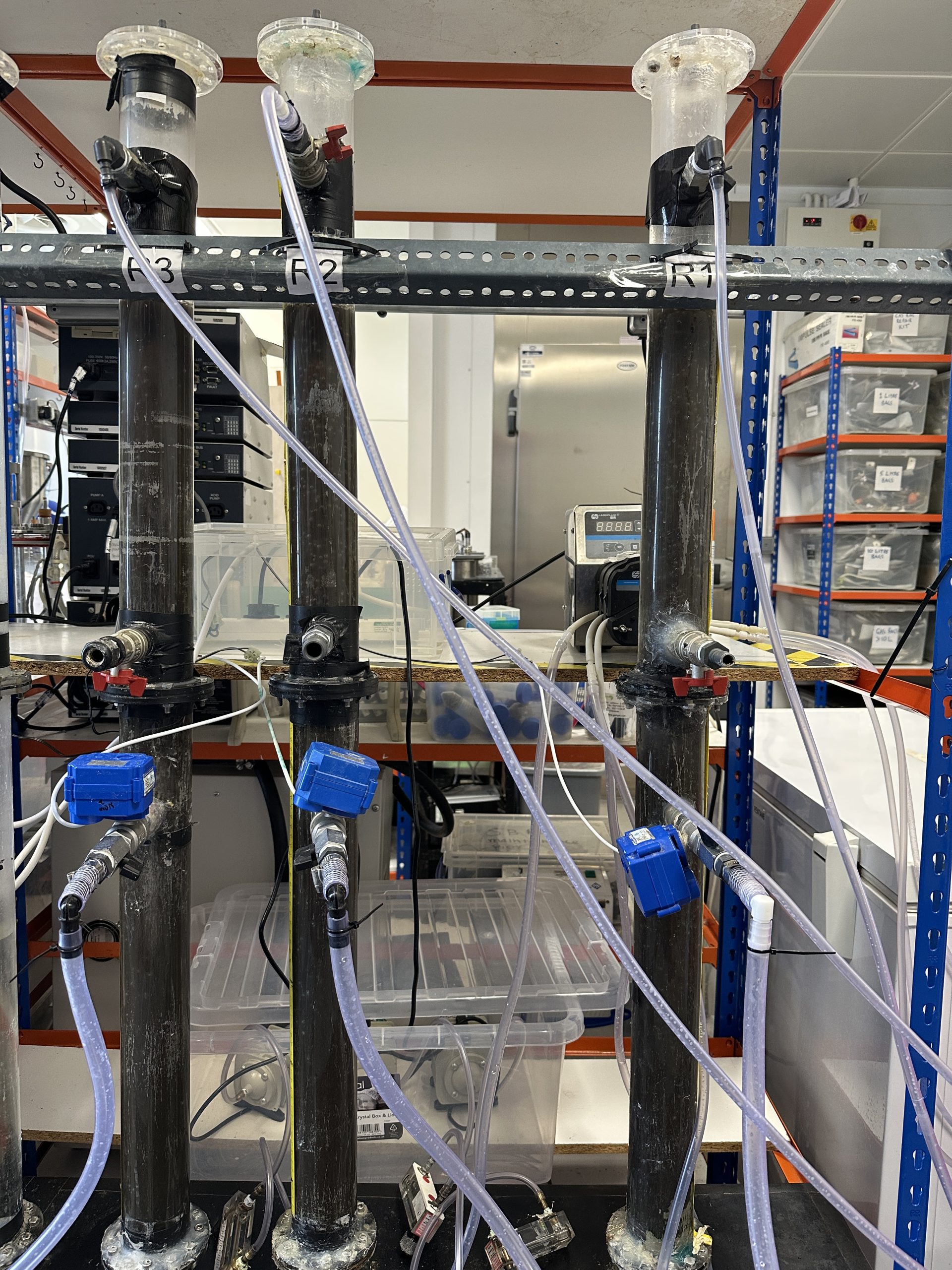
Second, pilot coaugmentation rather than solo seeding: introduce paired degrader and aggregator cultures in sequencing batch reactor pilots or moving bed biofilm reactor pilots and monitor retention, extracellular polymeric substance production and signalling markers.
Third, use operational levers to favour granulation and scaffold formation, for example by applying feast–famine cycles, imposing hydraulic selection pressure and controlling the organic loading rate.
Fourth, measure signalling molecules such as acylhomoserine lactones and autoinducer2, monitor cyclic diguanosine monophosphate proxies and track extracellular polymeric substance composition as early indicators of successful integration.
This is not academic tinkering. It is a pragmatic route to reduce chemical dosing, cut repeat inoculation costs and treat emerging contaminants that defeat freecell approaches. The science is mature enough to justify pilots at operational scale.
The potential payoff is substantial: more stable treatment plants, fewer process failures and a step change in how we deploy microbes in the real world.
If you manage a treatment works, begin screening your granules; if you design reactors, build to favour aggregation.
The era of carrierfree, biologyled immobilisation is here, and the next wave of fullscale pilots will show which aggregator–degrader partnerships deliver lasting wins.