




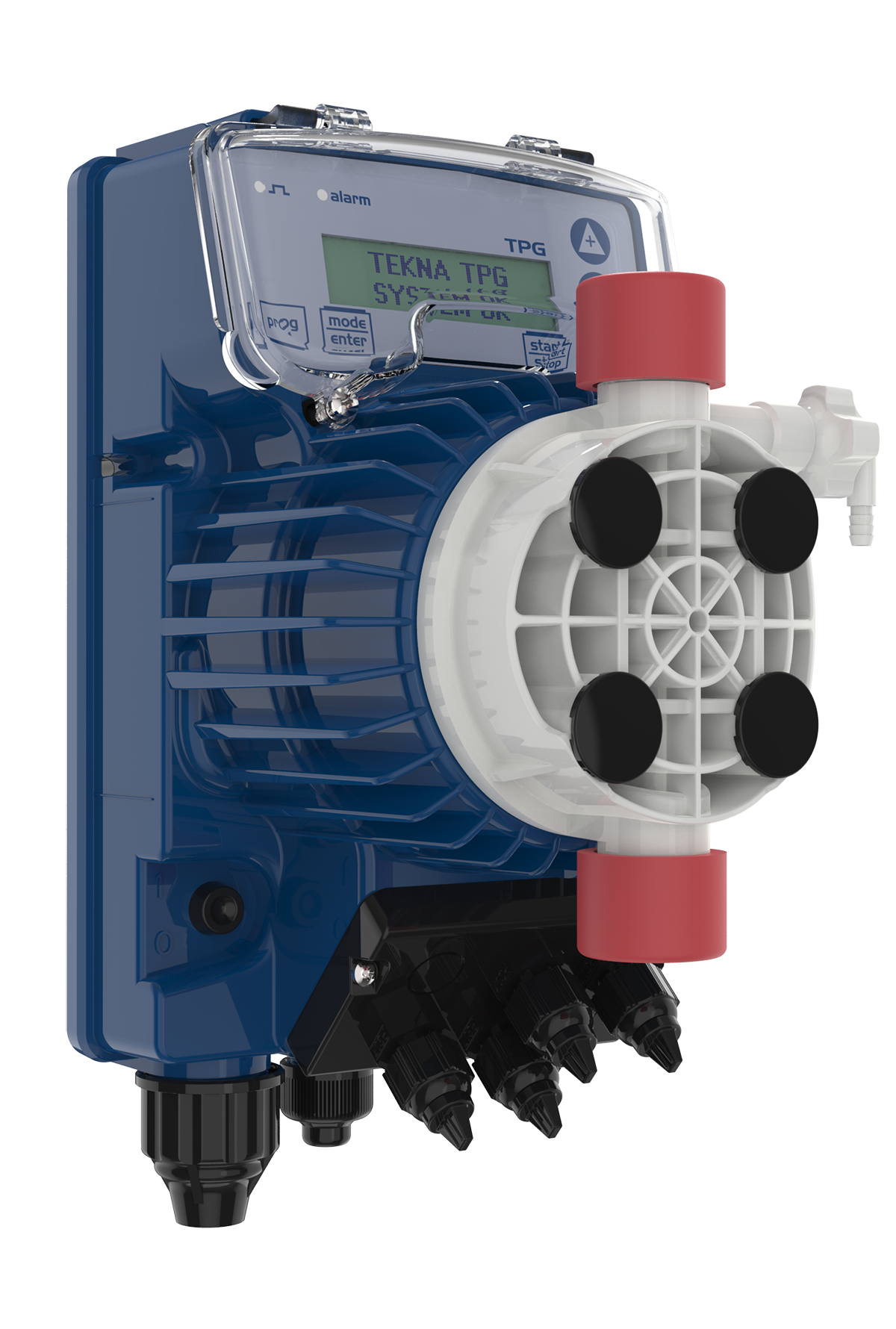
From power generation to wastewater treatment, when it comes to the handling of chemicals – including the most aggressive fluids – operators must make a number of vital considerations during pump selection to ensure components are compatible with the media to be transferred or injected.
Failure to do so will eventually result in component and system failure, which, as well as causing costly and inconvenient unplanned downtime and increased maintenance requirement, may have repercussions such as contamination or environmental harm.
Here we’ll look at the most common pump component materials and assess their suitability for handling commonly found chemicals in applications as varied as water treatment, food production and clean in place.
Nitrile rubber (NBR) is one of the most common solenoid valve seal materials and is widely considered the most suited to mild chemicals as it has poor resistance to media such as acetone, chlorinated hydrocarbons and ether.
EPDM rubber is widely used for diaphragms, ball checks and O-rings and is compatible with caustic solutions, dilute acids, ketones and alcohols as well as having good abrasion resistance.
PTFE is well known for its exceptional chemical compatibility, with its extreme corrosion resistance meaning it is resistant to most acids, alcohol, detergents and solvents. It’s commonly found in diaphragms, ball checks and O-rings.
Hytrel®, a versatile thermoplastic elastomer, is used in diaphragm production for its resistance to oils, fuels, hydrocarbon-based solvents and other chemicals.
Santoprene® is a thermoplastic rubber that is resistant to a wide variety of solvents and chemicals including alcohols, ketones, glycols, esters and aqueous solutions of acids, salts and bases. It’s commonly used for peristaltic tubing as it degrades at a slower rate than most other tubes and therefore offers greater dosing precision for longer.
Stainless steel is of course highly resistant to corrosion and can therefore handle most acidic media. However, the level of resistance will depend on the concentration and type of acid, temperature and the steel grade. For example, grades 316 and 317 offer resistance to phosphoric acid at most concentrations and sulfuric acid at concentrations below 10 per cent; grade 904 offers resistance to high concentrations of sulfuric acid; and types 304L and 430 are resistant to nitric acid.
Commonly used for seats, polypropylene is a general-purpose material with wide chemical compatibility, offering resistance to media such as citric acid, formaldehyde, nitric acid, sodium hydroxide and sulfuric acid.
As well as its excellent capacity for withstanding high temperatures, PVDF boasts strong chemical resistance to acids, bases, organic solvents, chlorine and bromine and is often used for wetted pump parts including seats and heads.
Aluminium components are used in a broad range of applications due to their resistance to solvents and hydrocarbons, with the exception of 111.-trichloroethylene, methylene chloride or other halogenated hydrocarbon solvents which react and explode.
Viton, often used to manufacture O-rings, offers excellent resistance to caustic and acidic media, hydrocarbons and oils and also withstands solvents such as ketones and acetates.
SEKO is a global manufacturer of chemical dosing pump systems for water-treatment processes. The company develops peristaltic, solenoid, water and air-driven solutions for applications including wastewater, cooling water, industrial water and swimming pool water treatment.
www.seko.com