




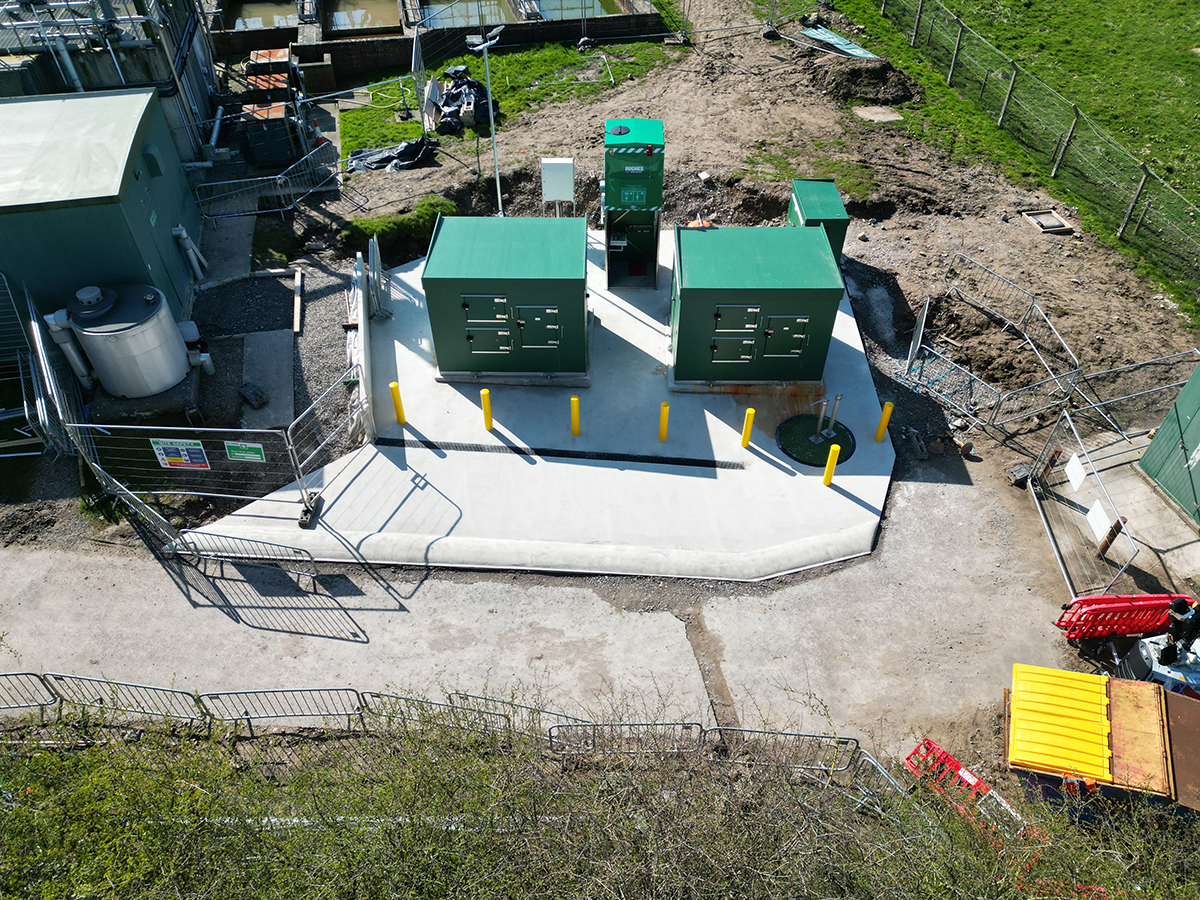
New infrastructure has been introduced at Over Kellet and Nether Kellet Wastewater Treatment Works, including new chemical dosing equipment.
The investment at the United Utilities sites, north of Lancaster, will reduce the phosphorus levels of effluent water and improve the quality and long-term ecological health of nearby Nether Beck.
The project was delivered by bWGM, a joint venture partnership between RSK Group companies Binnies and WGM Engineering.
bWGM Project Manager Euan Lucas said: “The solution uses ferric to remove phosphorus molecules from the treated wastewater.
“During this process, ferric naturally causes the pH level of the wastewater to lower, so to counteract this, caustic is also used to bring the pH back to the optimal range.”
“This investment in new infrastructure from United Utilities will have a significant impact on improving the quality of treated wastewater from the works when it is returned to the environment at the end of the treatment process.
He added: “Access to the sites was constrained, and as a result, the new chemical dosing kiosks have been manufactured and tested off-site, which has enabled a much quicker installation process.
“To counter the narrow site access, a specialist lifting contractor was brought in to install the kiosks using specialist lifting equipment.
“Compounding these logistical constraints, construction took place within a live wastewater treatment works, where available working areas are extremely limited.
“To maximise usable space, the project team removed redundant treatment infrastructure, repurposing these areas to accommodate the new assets.
“This enabled the project to progress safely while ensuring uninterrupted treatment of wastewater for United Utilities customers.”
Euan added: “The designs for the upgrades include a bespoke manhole that acts like a typical manhole during normal operations but can be isolated during chemical filling.
“This means that should there be a chemical spill, the manhole would collect the spillage, ensuring it does not travel to the ground or nearby watercourses.”
To develop this solution, bWGM used Building Information Modelling (BIM) on both projects,
Euan added: “By developing a fully integrated 3D model, the team has been able to visualise the new treatment infrastructure within the tight site boundaries, identify conflicts early and eliminate clashes before works begin, leading to a well-coordinated and predictable build programme.”