



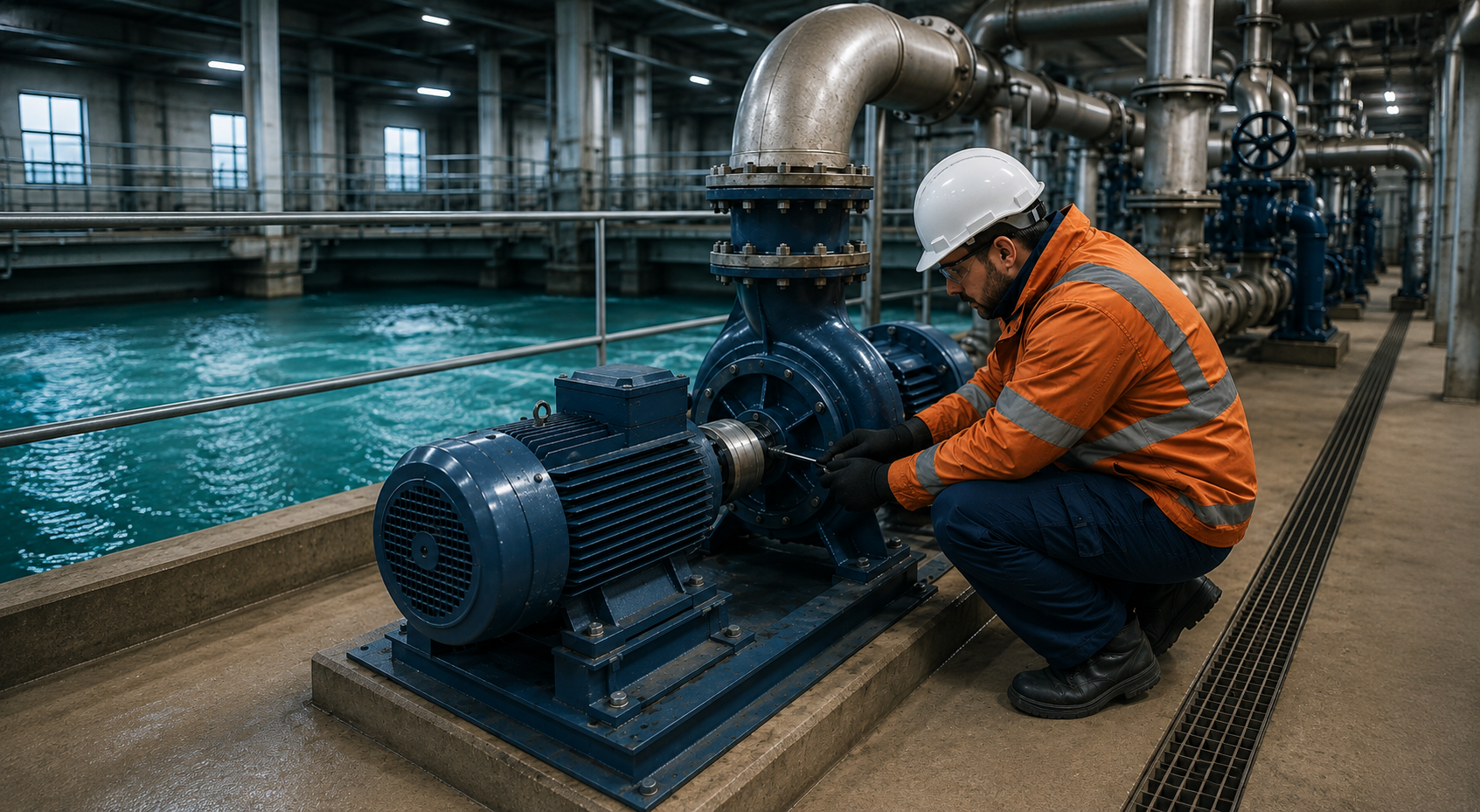
The hidden cost of reactive maintenance, and why it ages the kit fastest.
The reactive trap
At too many water treatment works, the process plant ticks away in the background until something fails. A pump trips, conductivity spikes, or the final water starts drifting out of spec. Someone raises a job. An engineer arrives a day or two later. The immediate fault gets fixed, and the plant goes back to running unattended until the next failure.
This is still how a surprising amount of water treatment operates across the UK. The system runs until it breaks, gets patched, and runs again. Each individual repair feels like a manageable cost. But that view only holds if you never add them up.
What reactive maintenance actually costs
The repair bill is only the starting point. An emergency callout costs significantly more than a planned visit. The engineer is working under time pressure, parts may need to be sourced at short notice, and the diagnosis is often incomplete because the focus is on getting the system running again rather than understanding why it failed.
Then there’s the lost output. When a treatment works goes offline or drops below capacity, the consequences cascade. For a potable water works, that could mean supply interruptions or having to bring in tankers. For a wastewater works, it could mean a consent breach and an Environment Agency investigation. Either way, the costs dwarf what a service contract would have caught. A typical maintenance contract runs to tens of thousands per year. An enforcement action, supply failure, or emergency capital replacement runs to multiples of that.
The knock-on damage is harder to spot but often more expensive still. Poorly treated water travels downstream into distribution networks, or poorly managed process stages put extra load on the stages that follow. Scale and corrosion build across interconnected systems. Heat exchangers lose efficiency. Membranes work harder. Chemical consumption creeps up. By the time someone connects the dots, the damage has spread well beyond the original fault, and energy and chemical costs have been climbing quietly in the background.
And there’s the regulatory exposure. Water companies operate under tight regulatory scrutiny from the DWI, the Environment Agency, and Ofwat. A treatment works that can’t maintain compliance because of avoidable equipment failures is a reputational and financial liability. One failed sample can trigger an investigation. A pattern of failures can affect a company’s performance commitments.
Why reactive maintenance ages equipment faster
Water treatment plant has a reputation for hanging on. The system keeps producing water, the readings look acceptable, and nothing has visibly failed. This lulls operators into thinking the plant is in better shape than it is. Meanwhile, corrosion, weakening plastic pipework, perishing diaphragm seals, and degrading vessel linings are all progressing quietly, allowing sites to sleepwalk towards very costly plant failures.
Equipment running outside its design parameters makes all of this worse. Membranes operating at higher pressures than intended foul more quickly and need replacing sooner. Resins that aren’t regenerated on schedule exhaust prematurely, losing capacity each cycle. Pumps running dry or against closed valves cavitate, chewing through impellers and seals. Each of these problems starts small. A membrane that should last five years might last one to two. A resin bed due for annual replacement might need changing every eight months.
Left unmonitored, the incremental cost of early asset replacement adds up to far more than the cost of watching things properly. With AMP8 bringing the biggest investment programme the water sector has seen, getting more life out of existing assets while new capacity is planned and built has never mattered more.
What planned maintenance and monitoring change
Remote monitoring tracks the indicators that matter: conductivity, pressure differentials, flow rates, chemical dosing levels, and system run hours. Trended over time, these readings show when performance is drifting before it becomes a failure.
For larger treatment works, parameter telemetry becomes a necessity. Normalisation programmes and regular RAG (red, amber, green) evaluation reports keep the system secure and performance on track. Knowing exactly when to adjust instrumentation, change dose rates, replace seals, or schedule a CIP (clean in place) can save tens of thousands of pounds by avoiding production losses and keeping effluent, power, chemical, and general maintenance costs under control.
With a tailored service contract in place, early warning signs get spotted and dealt with before they develop into serious problems. Bespoke services like resin and media condition analyses and RO membrane autopsies give operators objective data to make decisions with, rather than guessing at what’s happening inside the system.
A maintenance contract also gives engineers the time to unravel recurring faults. With the right data and a proper mitigation plan, callout frequencies can drop dramatically. Instead of unpredictable repair bills arriving at random, the works pays a fixed monthly cost covering monitoring, planned visits, and consumable replacements. For water companies under pressure to control totex while maintaining service, that predictability is worth a lot.
The bigger picture
The water industry is spending more on treatment infrastructure over the next five years than at any point in its history. Much of that investment will go on new capacity and upgrades. But for every new build, there are dozens of existing works where the treatment plant is ageing, running harder than it was designed to, and maintained on a fix-it-when-it-breaks basis.
The pattern is the same on most sites. The plant runs until it fails, and the cost gets absorbed as business as usual. But once you’ve seen what planned maintenance and monitoring actually cost compared to the alternative, the case for changing the approach is difficult to argue with.
Nick Whiteley is Senior Technical Support Manager of PureTec Separations Ltd. PureTec designs, builds and maintains water and wastewater treatment systems for industrial operators across the UK.