




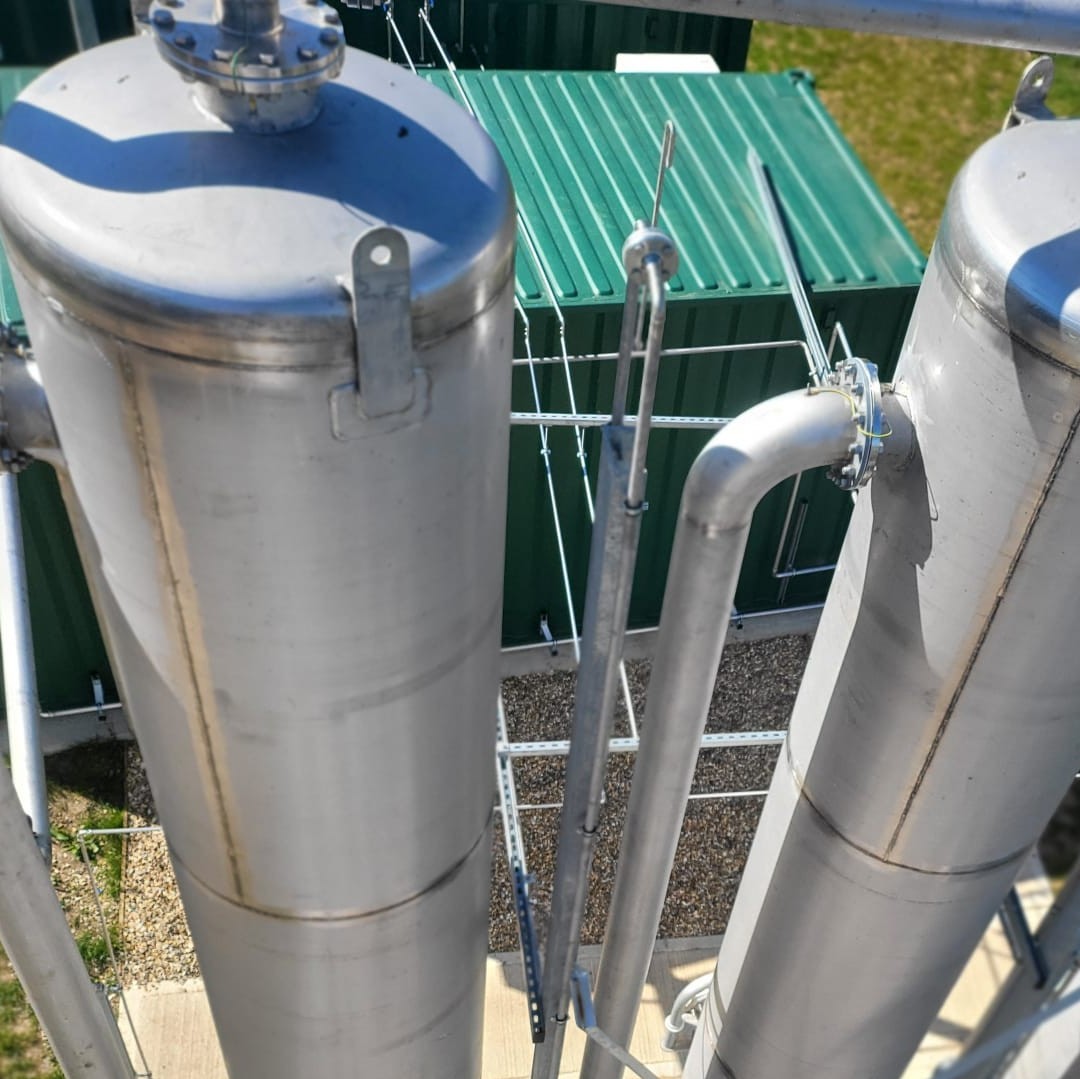
Howard Marles sets out how Curio Water’s new BlueBarrier™ treatment train has built on the lessons of the UK’s first micropollutant removal plants to offer a solution to PFAS removal.
Two years ago, we wrote in this journal about the micropollutant pilots then getting underway at Frankton, Ludlow and Itchen Bank as part of the Severn Trent’s Green Recovery Bathing Rivers programmes.
Those pilots have since become the UK’s first operational micropollutant removal plants. But in this time, the conversation has moved on from not just hydrophilic micropollutants from pharmaceuticals and pesticides – but also PFAS, microplastics and other more stubborn contaminants.
In short, these require more advanced treatment systems.
At present, regulatory noise and public awareness is growing in step. The Cunliffe Water Review, published in July 2025, named micropollutants — including PFAS, pharmaceuticals and microplastics — as some of the central challenges facing the sector.
The Government’s more recent water reform white paper from January A New Vision for Water suggests wastewater standards should be in line with the EU’s revised Urban Wastewater Treatment Directive, with a consideration of whether stricter treatment requirements for micropollutants and PFAS are now needed.
When it comes to tens of thousands of different PFAS found in our waterways, there are an array of technologies in the pipeline that range from the experimental to well established.
But implementing both the technologies and the systems that can deliver them into existing wastewater infrastructure – and indeed budgets – is a real challenge for the industry.
The ideal scenario at present are treatment trains that can tackle micropollutants and certain long-chain PFAS, whilst being flexible enough to accommodate future technologies as research and understanding in this area grows.
This is the thinking that has gone into the development of our new BlueBarrier water treatment launched at this year’s Water Utility Live.
In essence, we want a solution for the industry that brings together existing water technology providers, and one that can be implemented now to deal with the contaminants of today, as well as being adaptable for tackling future contaminants that come into focus as regulations change.
It builds on our experience of the UK’s first micropollutant removal plants, where rigorous on-site testing and a pilot phase informed the subsequent dosage and sequencing of the treatment. In the long run this saved money and meant what was built actually worked for the local water matrix.
The BlueBarrier treatment process, designed to tackle hydrophilic micropollutants, long chain PFAS, microplastics and antibiotic-resistant bacteria runs as follows.
Ozone, injected via Statiflo’s inline static mixers, remains the opening stage, breaking down complex organic molecules into simpler, biodegradable forms. Within this stage, Advanced Oxidation Processes generate hydroxyl radicals that specifically attack PFAS precursor compounds before they reach the carbon stages.
What follows next is deliberately sequenced. Biological activated carbon (BAC) comes next, gobbling up the biodegradable organic carbon that the oxidation phase produces. In doing this, it clears, reduces fouling and preserves adsorption capacity further down the train.
An ultrafiltration barrier then strips out suspended solids and any biological carryover, so the GAC bed that follows receives consistently low-turbidity water.
GAC provides the primary defence against long-chain PFAS, capturing PFOS, PFOA, PFHxS and PFNA through hydrophobic and intermolecular surface interactions. Then comes the final UV stage which disinfects the water and polishes any remaining trace contaminants.
Wastewater enthusiasts will know that none of these technologies are new individually. What the BlueBarrier train does is embed collaboration into tackling this problem. Water scientists, technology providers and those with the engineering know-how of the UK’s wastewater infrastructure can build a solution that delivers on one of our most pressing challenges.
Howard Marles, CEO and Founder of Curio Water, is a water treatment specialist with more than 30 years of international experience in ozone, UV, and advanced oxidation technologies across municipal and industrial water treatment.