




March 12 marks the first International Day of Ceramics, an initiative established to highlight the vital role ceramic materials play in modern life and technological systems, from electronics and energy to infrastructure and manufacturing.
Water treatment is one of those applications where ceramics operate under continuous mechanical stress, chemical exposure, solids variability, and repeated cleaning cycles. In this environment, material choice directly influences uptime, footprint, and long-term economics.
For years, ceramic ultrafiltration was viewed as a specialist solution for particularly aggressive or high-risk applications. That perception is changing. Ceramic UF is increasingly part of mainstream technology evaluation as utilities and industry reassess lifecycle stability, footprint constraints, and risk mitigation. In parallel, advances in module design and membrane density have brought the technology close to cost parity in defined project contexts, broadening its relevance in both municipal and industrial systems and bringing ceramic UF to the forefront of mainstream project evaluation.
Acuriant, through its Nanostone ceramic UF brand, has been instrumental in that transition.
Expanding the ceramic UF design envelope
Nanostone’s ceramic UF platform is built on engineered monolith architecture and precision selective layers designed for long-term structural integrity. Over more than a decade, the company has supported municipal and industrial installations worldwide, demonstrating how ceramic design translates into reliable system performance.
Recent product developments have further expanded the addressable market.
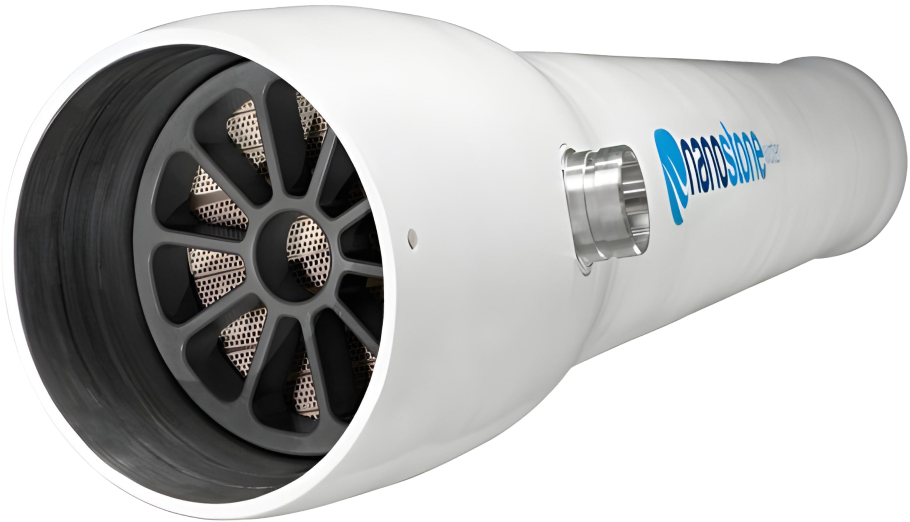
The introduction of the high-capacity CUF|Flow module represents a significant step forward. By increasing membrane area per module by approximately 40 percent while maintaining structural robustness, CUF|Flow reshapes the economic equation in defined project conditions. Higher membrane density directly influences footprint, expansion planning, and total installed system economics, making it particularly suited for low- to moderate-solids applications such as municipal drinking water, reuse, and industrial process water.
Alongside CUF|Flow, the portfolio includes CUF|Shield and CUF|ShieldPlus, each engineered for a distinct operational priority.
CUF|Shield is the high-solids priority module. It is designed for applications where suspended solids loading, fouling intensity, and mechanical stress demand maximum durability and operational stability in both municipal and industrial systems.
CUF|ShieldPlus is dedicated to the most complex and chemically aggressive industrial streams, including semiconductor, pharmaceutical, and other specialty manufacturing wastewater environments where chemical resistance and structural resilience are decisive.
Together, CUF|Flow, CUF|Shield, and CUF|ShieldPlus form a PFAS-free ceramic UF portfolio that spans high-capacity municipal applications, high-solids treatment duties, and chemically demanding industrial processes.
Two sessions on March 12
To coincide with the International Day of Ceramics, Acuriant will host two live online sessions, free to attend, examining ceramic UF from complementary perspectives.
14:00 Central European Time: Ceramics in Society-Critical Water Applications
This session will be led by Christian Göbbert, Chief Science Officer and Vice President of R&D at Acuriant, who brings more than two decades of experience in ceramic membrane technology. Designed for materials scientists, ceramic engineers, researchers, academics, students, and advanced materials innovators, the session explores how microstructure, mechanical strength, surface chemistry, and durability under chemical stress translate into systems that operate continuously in municipal and industrial infrastructure.
Participants will learn:
- Why water treatment represents a severe materials environment
- How ceramic ultrafiltration modules are structured and why geometry matters
- Where ceramics outperform polymeric alternatives
- Where further material innovation can enhance performance
15:30 Central European Time: Ceramic UF in Practice for Water Professionals
This session will be led by Barnaby Brampton and Mitchell Sijm, process engineers at Nanostone Water who work directly on ceramic UF projects for clients worldwide. Designed for utility leaders, plant managers, EPC firms, consulting engineers, and industrial water operators, the session focuses on operating outcomes and project economics.
The presenters will share two case studies drawn from municipal and industrial projects worldwide, addressing:
- Performance under variable feedwater conditions
- Cleaning behaviour and recovery dynamics
- Footprint implications and expansion planning
- When ceramic UF delivers the strongest operational and economic value
Both sessions include live Q&A and are open to professionals across materials science and water treatment.
Click HERE for Further details and registration