



Utilities and industrial operators face compounding pressures. Feedwater variability is increasing, regulatory scrutiny is intensifying, capital budgets remain constrained, and operating teams are expected to maintain performance with limited room for disruption.
Against that backdrop, ceramic ultrafiltration has shifted position. What was once specified primarily for demanding or high-risk applications is increasingly evaluated as a first-choice treatment barrier. The reason is practical. The economics have strengthened, maintainability has improved, and the overall risk profile has evolved.
Capacity changes the financial equation
Acuriant recently launched its Nanostone CUF|Flow module, a high-capacity ceramic UF module that delivers roughly 40 percent more membrane surface area within the same physical envelope as CUF|Shield, Nanostone’s debut product. The practical effect is straightforward. The same plant output requires fewer modules and less rack space.
In retrofit environments where building constraints determine feasibility, that difference can decide whether expansion proceeds within existing structures or requires new civil works. Utilities reviewing upgrade plans have found that higher-capacity ceramic modules enable capacity growth inside current facilities, reducing capital intensity per cubic meter.
Ceramic ultrafiltration has long been regarded as mechanically robust, stable under harsh conditions, and aligned with infrastructure time horizons, with membrane lifespans measured in decades rather than months. Earlier hesitation centered less on lifecycle logic and more on capital perception and procurement familiarity. As higher-capacity modules close that economic gap, lifecycle cost comparisons are being revisited and ceramic increasingly competes on both durability and throughput economics.
True UF performance shapes downstream design
Barrier integrity remains central. Nanostone CUF modules deliver mean log removal values of 6.1 for key pathogens, providing a highly reliable ultrafiltration barrier against bacteria, viruses, and Cryptosporidium.
That level of removal performance directly reduces water quality risk and can influence downstream disinfection design. Higher pathogen reduction at the membrane stage may reduce chlorine contact requirements, limit the size of contact tanks, and in some applications remove the need for UV systems. Over a 20 to 30 year asset horizon, these design implications carry weight.
Regulators are placing increasing emphasis on repeatable performance over the full operating life of membrane systems. While log removal performance remains essential, greater emphasis is now placed on how reliably that performance can be sustained over decades of operation. Long-term integrity and structural robustness are therefore receiving increased scrutiny in technology selection.
Operational clarity reduces intervention risk
For plant managers, maintainability is often decisive.
In many conventional membrane systems, multiple elements are housed within closed pressure vessels or submerged frames. When performance declines, isolating the issue may require extensive troubleshooting, draining tanks, or lifting heavy assemblies. Downtime extends, and operational complexity rises.
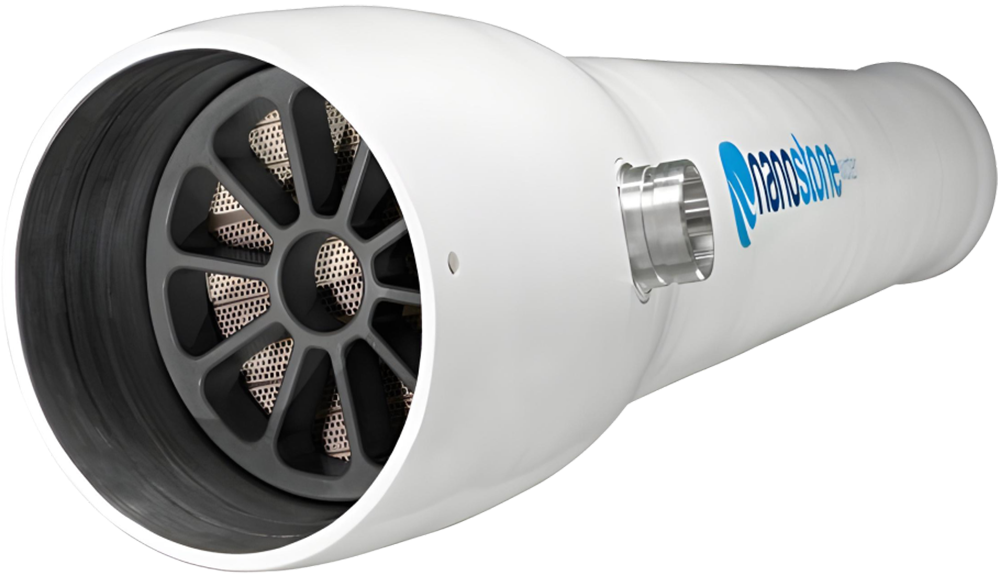
Individually housed ceramic modules offer a different operating experience. Each module is individually connected to the rack manifold, allowing operators to immediately identify, isolate, and remove a single unit without affecting the rest of the rack. Modules can be removed quickly using a simple trolley or lifting beam. No cranes or specialized lifting equipment are required. The membrane housing itself is guaranteed for life and does not require routine seal replacement.
Consider a plant constrained by building height where vertical removal of multi-element vessels presents logistical and safety challenges. In such settings, horizontal access and modular replacement simplify day-to-day operations. For teams managing aging infrastructure with limited staffing, this clarity reduces outage duration and operational stress.
Flexibility supports phased investment
Raw water variability is no longer confined to seasonal events. Catchment shifts, industrial discharge variability, and climate-related impacts are reshaping feedwater characteristics.
Asset planners increasingly seek systems that allow staged capacity increases. Ceramic UF racks can be installed with open positions for future modules. Capacity can grow without significant structural alteration, allowing capital deployment to align more closely with demand growth.
In space-constrained sites, higher capacity per module improves layout efficiency and can eliminate the need for additional rack rows or structural expansion.
Open architecture and material certainty
Procurement flexibility is another consideration. Systems that rely on proprietary control platforms, vendor-specific hardware, or tightly bundled service agreements can restrict long-term operational autonomy.
Nanostone ceramic UF systems are built around standard pumps and valves and integrate readily into existing plant environments. Infrastructure and modules can be sourced independently, supporting competitive procurement over time.
Material composition has also entered the risk discussion. With regulatory attention on PFAS intensifying, treatment materials themselves are under scrutiny. Ceramic membranes are PFAS-free by construction. For asset owners managing multi-decade installations, this removes a layer of potential future compliance exposure.
A shift in default assumptions
Higher capacity. Transparent maintainability. Verified UF-grade performance. Modular expansion capability. PFAS-free construction.
Taken together, these characteristics have altered how ceramic ultrafiltration is assessed in municipal and industrial settings. Engineers examine maintainability and footprint. Executives evaluate lifecycle cost, regulatory certainty, and expansion flexibility.
For utilities and industrial operators entering their next capital cycle, it is time to reassess long-held assumptions about membrane selection and evaluate high-capacity ceramic ultrafiltration as a central element of modern treatment design.
For more information visit:
acuriant.com and nanostone.com