




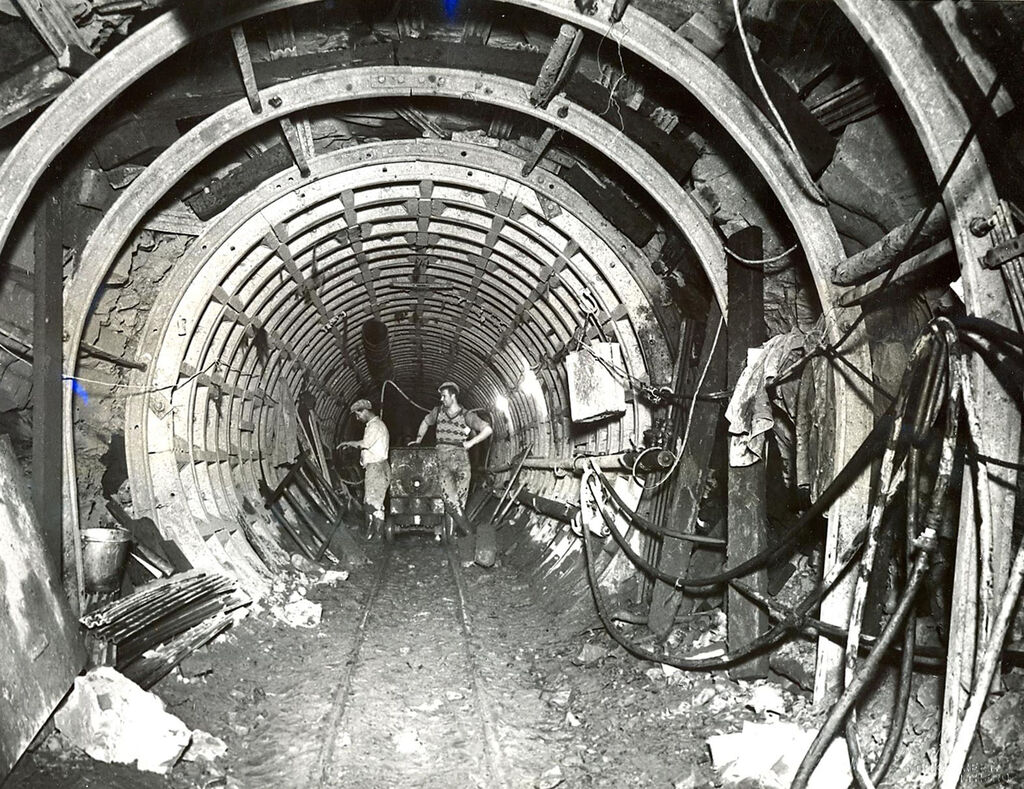
The Haweswater Aqueduct – stretching from Cumbria to Greater Manchester – has long been recognised as a major feat of engineering. This vital gravity-fed pipeline is now undergoing a £3bn tunnel upgrade – one of the UK’s biggest ever water infrastructure projects – to secure fresh water supplies for over £2.5m people today, and generations to come. Water Industry Journal spoke to John McNeill, Head of Programme Delivery (HARP) about United Utilities’ flagship project.
Known as The Haweswater Aqueduct Resilience Programme (HARP), the scheme will replace all six of the original hand-excavated tunnels with high-tech bored tunnels and new pipelines.
Built between 1933 and 1955, the 110km pipeline uses gravity to carry 570 million litres of water every day to customers in Cumbria, Lancashire and Greater Manchester – nearly 5 per cent of England’s population.
And as the largest treated water aqueduct in Europe, it takes around 24 hours for water to travel its full length.
Initially designed to carry 105m gallons daily to allow for future demand, the system is a combination of covered concrete channels, steel-cored concrete single-line siphons and concrete-lined tunnels.
Now – after detailed investigations to assess its condition – United Utilities is preparing to replace the ageing tunnel sections along the aqueduct’s length. Most of the work will be carried out underground using the latest tunnelling techniques.
Construction costs are estimated to be around £3bn, with delivery by the Cascade Infrastructure consortium, a leading name in European tunnelling schemes.
Work is anticipated to take around eight years.
HARP is a first in the water sector, delivered through Direct Procurement for Customers to provide best value, and covering all main elements from design to financing.
Why are the tunnels being replaced?
Between 2013 and 2016, United Utilities successfully took the Haweswater Aqueduct out of service so it could be inspected in detail. These investigations captured comprehensive data and enabled a number of targeted, localised repairs to be carried out fully.
The inspections identified two principal risks: a potential impact on water quality and the possibility of an interruption to the supply of safe, clean drinking water.
To address these risks, more than 300 different options were explored and assessed through a rigorous risk-reduction and cost-benefit process, informed by research with over 2,300 customers and detailed studies into environmental benefits.
Taking the aqueduct out of service was also a significant challenge. Isolation could only take place during short periods each year when demand was low enough to maintain customer supplies.
To prepare, specialist training camps were held to rehearse safe access and movement within the aqueduct, ensuring inspections could be completed as quickly and safely as possible once the valve was closed and the water system isolated.
Replacing 50km of tunnel will ensure the continued supply of high-quality drinking water to more than 2.5 million customers across Cumbria, Lancashire and Greater Manchester for generations to come.
What tunnelling techniques will be used?
The HARP tunnels will be mainly constructed using a TBM. A TBM is a large, complex machine used to excavate tunnels through various ground conditions, from hard rock to soft soil, whilst simultaneously installing the concrete tunnel lining to create a stable tunnel.
These “underground factories” advance below the surface with minimal disruption to the ground above and feature a rotating cutter head which uses steel discs or cutting tools to grind away rock.
What are the biggest engineering challenges?
1. Tunnel Boring Machine (TBM) selection
The initial notional design for the HARP tunnelling works proposed several different tunnel diameters. This was refined by standardising tunnel sizes across all main tunnelling sections, delivering several key benefits:
- Three identical TBMs will be used to bore all six tunnel sections. This reduces the need for TBM training and allows for shared use of consumables and spare parts.
- Tunnel linings will use standardised concrete segments. This increases the efficiency of the manufacturing process and reduces the complexity of logistics management.
- Together, these measures also reduce the carbon footprint of the tunnelling works by minimising waste and reducing the overall number of TBMs required.
2. Logistics
The diverse geographical settings of the launch and reception provide an opportunity to implement a bespoke, efficient logistics strategy that minimises local impact. This includes:
- Reducing vehicle movements by increasing the size of concrete segments used for tunnel linings.
- Avoiding construction traffic passing through the villages of NewtoninBowland and Waddington by constructing temporary haul roads and bespoke bridges over the River Hodder and the River Ribble.
- Establishing Park and Ride facilities for workers, alongside HGV holding areas close to the A59 near Clitheroe and Wray to allow us to co-ordinate HGV movements to avoid peak times.
3. Tunnel alignment
Along one of the tunnel routes, the notional design would have required the TBM to pass through glacial till — a layer of mixed materials with variable size and strength, presenting a risk of slowing or interrupting tunnelling progress.
- This was addressed by lowering the depth of the tunnel to avoid the glacial. This approach places the new tunnel in more stable ground than originally proposed.
- 4. Build clean
As the tunnels will transport potable drinking water, traditional tunnelling approaches have been adapted to ensure full compliance with Water Supply Regulations. Key measures include:
- Implementing controlled, clean working environments during construction to minimise the level of cleaning required at the end of construction.
- Using materials approved under Regulation 31 of the Water Supply (Water Quality) Regulations 2016.
How will water security be guaranteed during work?
The existing aqueduct will remain in service while the new tunnel sections are constructed. Once the new infrastructure is complete, supplies will be switched over, enabling us to continue delivering around 570 million litres of drinking water every day to customers across the North West.
What are the environmental considerations?
- A dedicated team of environmental specialists is working on HARP, with responsibility spanning from design through to commissioning, ensuring the project leaves a positive environmental legacy.
- As part of United Utilities’ overall AMP8 and AMP9 approach to biodiversity improvement, HARP will deliver a minimum 10% biodiversity net gain through a combination of on and offsite initiatives.
- A comprehensive monitoring strategy is in place, covering ecology, watercourses, dust, noise and vibration throughout the works.
- In rural locations, site lighting will be carefully designed with all lights directed downwards to prevent light pollution in dark skies.
- In builtup areas, noise impacts will be minimised through measures such as acoustic barriers around construction sites and above tunnel shafts.
- HARP valve houses will be constructed using materials that are in keeping with their surroundings, including the use of local stone.
- Where required, sites will be equipped with their own water treatment facilities to ensure site water is treated appropriately.
How is United Utilities engaging with stakeholders?
During the initial planning and consultation phases, we carried out a wide programme of engagement across Cumbria, Lancashire and Greater Manchester. This included more than 90 meetings with political stakeholders, landowners, technical specialists, representatives from interested groups and organisations, as well as three dedicated working groups made up of statutory consultees.
Now, with the support of colleagues from Cascade Infrastructure and STRABAG, we are spending time in the communities where construction will take place. This engagement is helping to keep customers and stakeholders informed about our plans, highlight opportunities for local jobs and apprenticeships, and share updates on community investment initiatives.
As construction activity increases, we will also host regular community exhibitions and dropin sessions throughout the programme, taking place at key stages of the works and continuing through to the completion of reinstatement.
When will main construction start, and what’s predicted end date.
Ground investigations, along with ecological and environmental surveys, are currently underway to support the detailed design of the programme. Construction will be delivered in phases across different tunnel sections, with all works expected to be completed and sites fully reinstated by 2033.