




Recent research projects have helped determine the impact that filter media design has on the performance of wastewater treatment processes such as traditional trickling filters, SAF, MBBR and IFAS. Mark Barrett, Warden Biomedia, reviews the results.
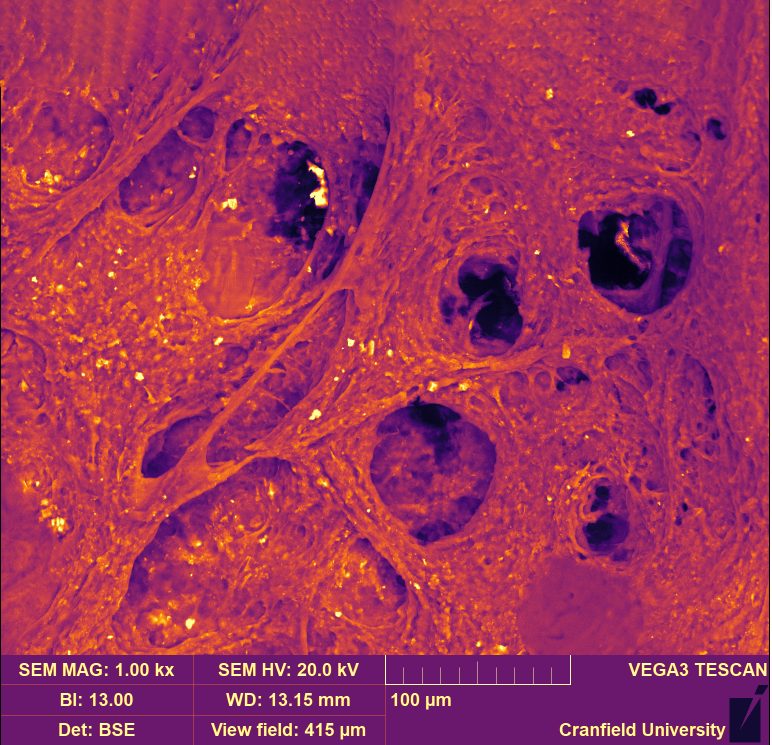
One of our early collaborative research projects with Cranfield University aimed to shed light on the physical properties of filter media products and their impact on start-up times.1
The results, published in an academic journal article in 2018, stated that spherical media achieved stable biofilm formation faster than cylindrical media (15-17 days compared to 23-24 days) with more uniform coverage.
Uniformity is important to the integrity of the biofilm and reduces the risk of detachment and biofilm abrasion once the plant is fully operational. Oxygen mass transfer was also higher for spherical media due to their higher voidage.
Best choice for traditional filter media applications: These findings indicated that, for applications like traditional trickling filter beds, the best choice is spherical random filter media such as Figure 2.
The internal fins and large openings offer a surface area of between 135m2/m3 and 220m²/m³ with high voidage (between 92% and 95%).2
The spherical designs enable the biomedia to form more rapidly and to retain their integrity. The structure and surface textures of the biomedia provide a protected environment to host the beneficial bacteria needed for biological treatment processes.
High voidage eliminates the problems relating to clogging and puddling which are typically associated with traditional gravel, slag and clinker filter beds. The fins also interlock in the filter bed to protect resilience.
Selecting filter media for SAF
Submerged aerated filters (SAF) or submerged aerated fixed film reactors combine high biomass concentration of fixed film processes with high oxygen transfer efficiency through forced aeration. With the soaring costs of energy in recent years, the efficiency of oxygen transfer is a major consideration.
The clean water baseline tests carried out by Warden Biomedia in collaboration with Cranfield University proved that media enhanced overall oxygen transfer efficiency by 23–45% and hydraulic efficiency by 41-53%.
These figures were then compared with wastewater tests carried out in operational conditions where biofilms were present. The three best-performing filter media designs (which proved to be those with spherical designs) increased the hydraulic efficiency to 89, 93 and 100% respectively.
Best choice for SAF: For SAF applications, high surface area gives optimum air to wet surface contact time and helps eliminate odour issues. High voidage is also important, as it means a low pressure drop on the gas side, minimising fan power helping contribute to environmental and sustainability targets. Warden’s recommended filter media products for SAF are Bioball® and Biomarble® (which also perform well in odour scrubbing applications). See Figure 3.
Choosing media for MBBRs and IFASs
Moving bed biofilm reactors (MBBRs) and integrated fixed film activated sludge (IFAS) processes make more complex demands on the filter media, requiring for example:
High protected surface area to increase SRT and biomass concentration for improved BOD removal and nitrification (>80%)
Large open areas to prevent media blockage by fast-growing aerobic heterotrophic biofilms under high load conditions
Durable and rugged filter media with density close to water
Controlled biofilm shear to minimise biomass thickness and detachment
Low sensitivity to shock loads and temperature changes
Flexibility for different configurations to achieve high quality effluent
It is also important that the filter media can be retrofitted cost-effectively to upgrade effluent quality and increase treatment capacity of established facilities, as many water utilities are investing heavily to improve their existing WwTPs.
Through mathematical models developed with Cranfield University, Warden Biomedia introduced a new parameter -“media dimensionality” – which has a direct positive impact on biological start-up time and the process operation during steady state conditions. This provided scientific validation for existing spherical media products recommended in MBBR applications, including Biopipe+®, Biotag® and Bioflo+®. See Figure 4.
Best choice for MBBRs and IFASs: Warden created a new type of filter media product and then supported a 3-year PhD project as a Knowledge Transfer Partnership with Cranfield University to compare the performance of this product against other industry options. The result is Biopebble®, see Figure 5.
This spherical media product improves biological commissioning times and process security. Its higher biomass retention also increases wastewater treatment capacity and enables the tank volume to be reduced.
In moving fixed film systems, dissolved oxygen (DO) set points are usually high (3–5 mg/L), compared to conventional ASP (1–2 mg/L). So, aeration efficiency needs to be optimised to minimise energy consumption and operational costs, while still maintaining process performance.3
Research has taken the guesswork out of achieving optimum performance, by quantifying the advantages of different shapes and designs of filter media in specific applications.
References
1. Dias, Bellingham, Hassan, Barrett, Soares, Stephenson, Bioresource Technology (2018)
2. Figures quoted refer to Warden Biomedia’s Biofil® or Bioball® products, recommended for traditional trickling filter beds.
3. Dias, Bellingham, Hassan, Barrett, Stephenson, Soares, Chemical Engineering (2018)