



With a growing number of housing developments held up by concerns over outdated and strained wastewater infrastructure, water companies must look beyond building new channels to increase flow capacity. Simon Light, Wilo UK, highlights the importance of screening in maximising the value of a potential solution – flow-to-full treatment.
The government’s target of building 1.5 million homes over this Parliament is both ambitious and well documented. With the number of planning applications for new homes in England at its highest level for four years, steady progress is certainly being made.
Yet, as more housing developments crop up, pressure on the nation’s existing sewer network is only growing.
The Victorian-era infrastructure was never designed for today’s population, and more cracks are beginning to appear. The solution has often been to build more, be it inlet channels, pipes or storm tanks, although this is becoming increasingly unviable due to rising costs and the carbon-intensive, slow construction process.
One option is to discharge excess wastewater into rivers or the sea to prevent sewage backing up into homes. As this method understandably raises significant pollution concerns, it is treated strictly as a last resort.
Instead, a growing number of water companies are leveraging flow-to-full treatment (FFT), which maximises the volume of wastewater that reaches the treatment works before any overflow occurs. This approach optimises existing infrastructure, saving money, reducing carbon and protecting the environment.
A concrete barrier
There are several consequences when flows exceed what a works can safely treat. Storm tanks fill and spill more frequently, triggering regulatory scrutiny, and treatment processes become unstable, breaching permit limits in the process. There are, in fact, over 2,000 works across England and Wales currently under investigation for permit breaches1, revealing the unprecedented scale of the problem.
As more homes means more wastewater entering the network every day, the system is being pushed beyond its capabilities. On the other side of the fence, developers can’t proceed unless the water company confirms the network can cope, which it often can’t, exacerbating the housing crisis. So far, almost 30,000 new homes have been blocked due to concerns over inadequate wastewater infrastructure.2
Building new inlet channels isn’t the right answer either, as the civil engineering works could reach seven figures while taking many months to build, holding up even more proposed schemes. Concrete
production alone is a major emitter and threatens to derail water companies in their own ambitions to decarbonise operations.
Saving through smarter screening
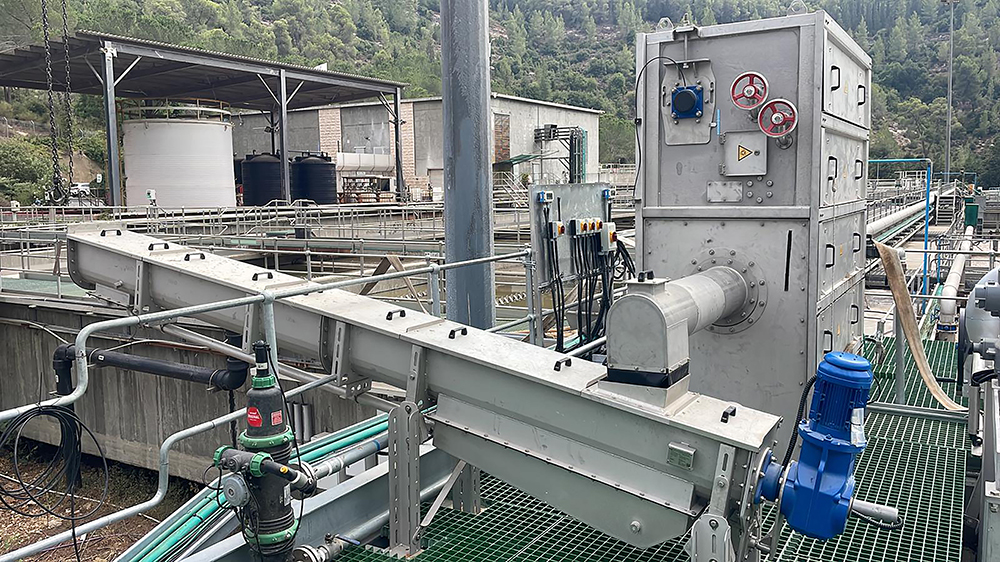
To realise the full potential of FFT, it’s important to recognise the role of inlet screening. When flows surge, the volume of debris entering the system also increases dramatically. Without effective screening, debris like wipes, plastics or grit can enter the downstream processes, further overwhelming equipment that was never built to handle such loads.
Modern hydraulic screens, high-flow panels and intelligent screening systems are essential, ensuring that even at higher flows, debris is removed efficiently, protecting pumps and aeration lanes from blockages.
In many older works, however, screening assets are undersized, meaning they can’t cope with peak flows. This forces the entire plant to work harder, consuming more electricity and increasing wear on critical assets.
As a result, it’s impossible to maximise FFT if inlet screens can’t physically pass the water through.
Upgrading screening capacity is often the single most cost-effective way to unlock additional hydraulic capacity without building more channels.
For instance, we recently worked with a major water company that needed to boost flow at a treatment works from 500 litres/second to 800. By adding three brand new screens, the water company will save upwards of £500,000. These are funds that can be invested into other crucial infrastructure upgrades to improve wastewater treatment across the nation.
A fresh approach to upgrading capacity
The wastewater sector finds itself at a critical juncture. The traditional response of building more concrete channels is no longer viable, leaving water companies requiring solutions that deliver capacity quickly, affordably and with minimal carbon impact.
FFT offers exactly that, but its success hinges on the ability of screening systems. Without them, the rest of the treatment process struggles to cope with flow, is forced to work harder and is made even more unstable.
Strengthening screening and maximising FFT are two of the most effective tools available, boosting resilience and supporting new housing developments, all while keeping costs under control.
References
1. https://www.gov.uk/government/news/record-81-criminal-investigations-launched-into-water-companies-under-government-crackdown
2. https://www.hbf.co.uk/news/drain-nation-release