




By Tom Rathmell, Strategic Development Director – Water, Tarmac.
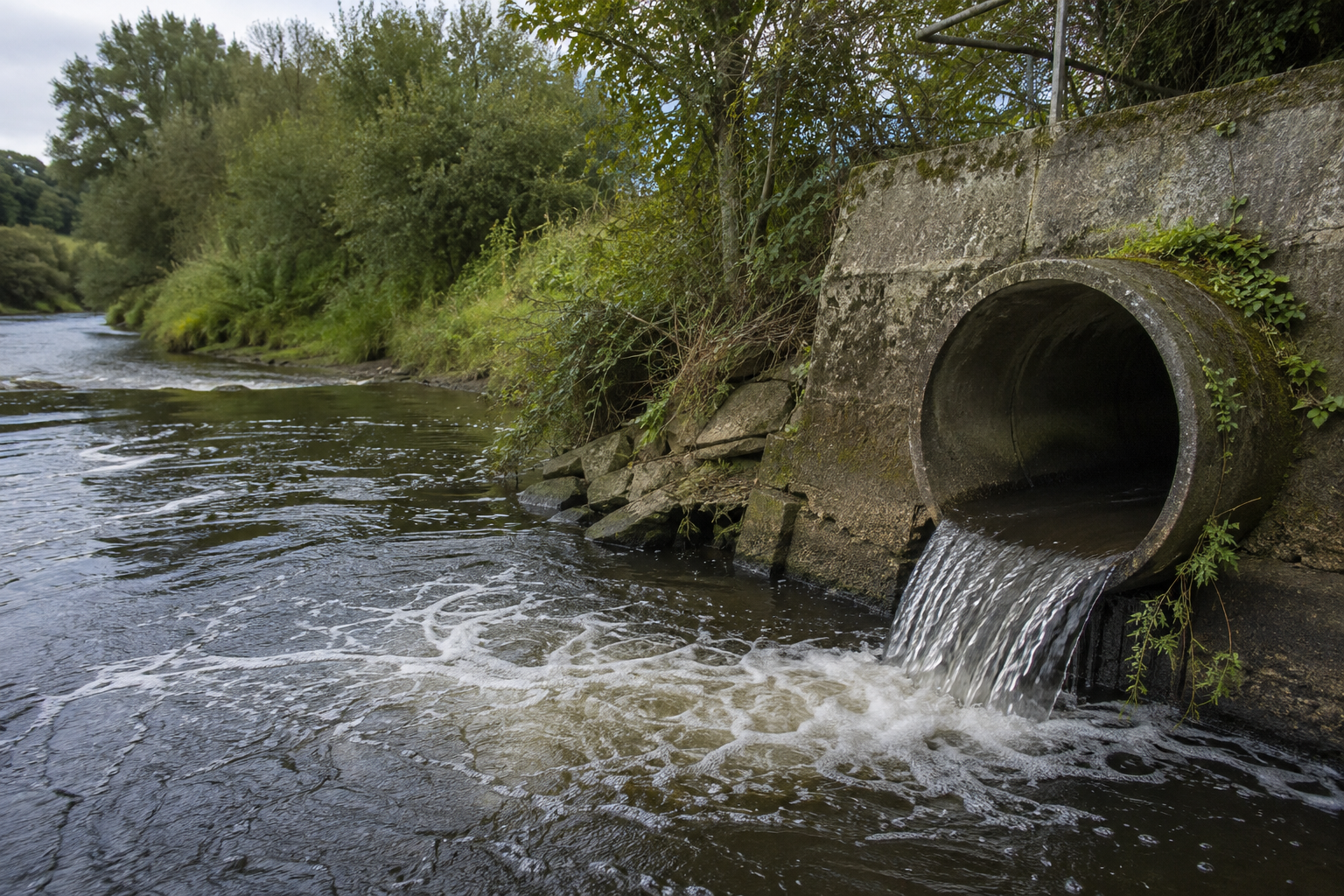
Storm overflows have become one of the most politically charged issues in the water sector.
Public concern is understandable. Communities want cleaner rivers, more accountability and faster action, and few would argue with those aims.
That scrutiny has played an important role in pushing reform up the agenda and defining the issues that are being tackled by the water companies.
But if the next phase of reform is to deliver genuine environmental improvement, the debate now needs to become more sophisticated.
The sector risks locking itself into a framework that is driven too heavily by headline spill counts and public visibility, rather than by the factors that matter most to ecological outcomes.
This distinction matters. Counting the number of discharges from a storm overflow can be useful as a basic indicator, but it is not, on its own, a reliable measure of environmental harm.
Frequency tells only part of the story because it does not capture volume, duration, the sensitivity of the receiving watercourse, or the cumulative impact of multiple hydraulically linked pressures within a catchment.
Two sites with similar spill records may have very different environmental consequences. Equally, a site with fewer discharges may still represent a more significant risk depending on where and how those discharges occur.
If policy and investment decisions are made too narrowly, there is a danger that funding will be directed towards the most visible or politically contentious locations rather than the places where intervention could achieve the greatest environmental benefit. Such a scenario would of course not be in the best interest of customers, regulators or the environment.
This is why the conversation needs to shift from a simple focus on reducing spill numbers to a broader objective which is about reducing environmental harm.
The requirements introduced under Section 82 for upstream and downstream monitoring are a step in the right direction – but the data they generate will only drive better outcomes if the regulatory framework is designed to use it.
Critically, this means taking a more catchment-led view of the problem and recognising that storm overflows do not operate in isolation. Their impact is shaped by wider network performance, rainfall patterns, land use, river conditions and the resilience of often ageing infrastructure. A more rounded assessment of risk would support more targeted and more effective investment decisions.
Storm overflows and flooding are two symptoms of the same underlying challenge: managing how water moves through a catchment. Neither respects institutional boundaries but, unfortunately, regulation, funding and accountability across catchments remain fragmented across multiple organisations.
The reality is that fragmentation costs us every time a major weather event hits. Yes, the UK is investing heavily in water resources, flood resilience and environmental improvement. In addition, there are plans to address water resource challenges through new reservoirs and strategic transfers, while significant funding is being directed towards flood resilience.
Yet, what is missing is a framework that brings these investments together through integrated catchment-scale planning, governance and accountability.
The Government’s Water White Paper is a step in the right direction and an opportunity to tackle these issues. Alongside AMP9 planning, it provides a timely opportunity to establish a more mature basis for reform – one that aligns regulation, investment and public expectations around holistic environmental outcomes rather than simple numerical targets.
With the time it will take to move this forward, I would like to see a considered strategy for how the industry can implement more joined-up, catchment-wide planning in the forthcoming transition plan.
On the whole, I believe that we need in the UK a more honest discussion about timescales. There is no single-AMP solution to this problem.
The scale of the infrastructure legacy challenge facing the sector means progress will require sustained, long-term investment over more than one regulatory cycle. That should not be an excuse for delay, but it does mean the industry and policymakers need to be clear with the public about the complexity of the issue and the practical steps needed to resolve it.
Crucially, a smarter framework should not be interpreted as a case for doing less. On the contrary, it is an argument for doing the right things in the right places. In some locations, network upgrades and storage capacity will remain the priority.
In others, treatment technologies at discharge points could have an important role to play alongside broader system improvements. The key is to create a framework that allows for proportionate, outcomes-led choices rather than relying on a single measure to determine where investment should flow.
Public pressure has been necessary in forcing the storm overflow issue into the spotlight. The task now is to make sure that pressure translates into a better model for action. For the supply chain working across the water sector, this has practical implications.
The shift towards outcomes-led, catchment-scale thinking requires a different kind of engagement at the design and procurement stage. It means challenging clients when investment decisions appear to be driven by spill counts rather than environmental evidence.
It means bringing forward solutions – whether network improvements, storage or treatment technologies at discharge points – on the basis of where they will achieve most, not where they are most straightforward to justify.
And it means making the case, consistently and collectively, for a planning framework that reflects the true complexity of the challenge. The sector will only move in this direction if those closest to delivery push for it.
If the sector is serious about cleaner waterways, then the next stage of storm overflow reform must be guided not just by what is easiest to count, but by what will make the greatest environmental difference.