



A LoRaWAN / Wize Case Study
Client Issue
A major French water utility serving almost 300,000 people faced growing challenges with its smart metering estate of more than 100,000 meters. When SUEZ assumed responsibility for the network, it inherited a technically complex environment built around a proprietary 868 MHz solution and LoRaWAN. While substantial investment had already been made in the metering infrastructure, the network was not delivering the levels of performance, visibility and scalability required to support the utility’s long-term objectives.
Connectivity was a particular concern. Only 86% of meters were reporting at least once within a 10-day period, leaving significant gaps in data collection and operational visibility. At the same time, many meters were experiencing poor radio conditions or coverage limitations, reducing the reliability of meter reads and increasing the effort required to monitor performance.
The architecture itself had also become fragmented. Data moved through multiple legacy systems, while monitoring, diagnostics and performance management were distributed across different platforms. This made it difficult to gain a clear view of network health, identify issues quickly and efficiently manage operations. The estate was also not well positioned for future expansion, creating concerns around scalability and the utility’s ability to support future smart metering and digital transformation initiatives.
Rather than simply replacing the existing network, the client was seeking a solution that could improve performance immediately while protecting previous investments and creating a sustainable platform for the future.
Solution
SUEZ adopted a pragmatic, value-driven strategy that focused on optimising existing assets while introducing targeted improvements where they would deliver the greatest benefit. The objective was clear: improve performance, simplify operations and create a future-ready infrastructure without unnecessary asset replacement.
Central to the solution was the deployment of a complementary Wize network. Operating on the open 169 MHz frequency band, Wize provided robust communication capabilities for meters experiencing connectivity challenges within the existing LoRaWAN deployment. Importantly, the Wize infrastructure was deployed using the same physical sites as the existing LoRa gateways, eliminating the need for additional site acquisition, planning approvals or landlord negotiations.
At the same time, SUEZ retained high-performing LoRaWAN meters, preserving the value of previous investments. To further support interoperability and long-term flexibility, SUEZ also transitioned the LoRa transmitter estate to an open protocol approach, reducing dependency on proprietary systems and enabling greater integration across the metering ecosystem. Underperforming meters were selectively upgraded with Wize transmitters, ensuring investment was focused precisely where it would deliver the greatest operational improvement.
To simplify the technology landscape, SUEZ introduced ON’connect as a unified Advanced Metering Infrastructure (AMI) platform. ON’connect replaced legacy network server and Meter Data Management layers, consolidating both LoRaWAN and Wize data into a single operational environment. The platform enabled secure communications, remote monitoring, data collection and centralised management across the entire estate.
Additional technical enhancements included the development of a custom frame decoder within ON’connect, supported by DIEHL, and the migration from Kerlink LNS and Birdz MDM to Netmore LNS and ON’connect. This established ON’connect as both the operational Head-End System and the central data aggregation and normalisation layer.
The result was a simplified, integrated architecture capable of supporting multiple communication technologies through a single platform and interface.
Results
The transformation delivered significant improvements in performance, reliability and operational efficiency while maintaining service continuity throughout the migration process.
One of the most notable achievements was the improvement in LoRaWAN performance. Meter connectivity increased from 86% to 97.6% for meters reporting within 10 days. Daily reporting performance also improved substantially, with 89.3% of meters now reporting every day and 99% reporting within 30 days.
The newly deployed Wize network demonstrated outstanding performance, achieving more than 99% connectivity within 10 days and delivering strong reliability even for meters located further from gateway sites. This validated SUEZ’s hybrid approach and highlighted the complementary strengths of Wize and LoRaWAN when used together.
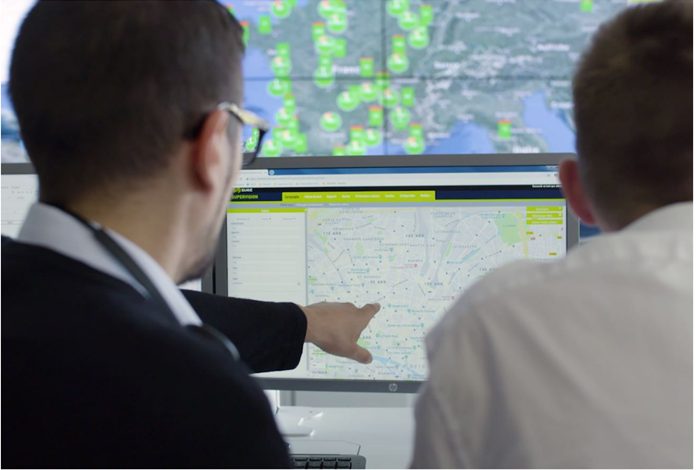
Operational visibility also improved significantly. By consolidating data into ON’connect, the utility gained a single view of connectivity, data completeness, meter alarms, battery status and gateway performance. Simplifying the architecture reduced system complexity while providing a consistent interface for downstream applications.
The project also demonstrated exceptional efficiency in asset utilisation. All 64 gateway sites were retained and upgraded, allowing SUEZ to reuse existing infrastructure and avoid the costs and delays associated with deploying a completely new network. Throughout the transition, LoRaWAN and Wize operated simultaneously, ensuring uninterrupted service, preserving billing continuity and preventing duplicate reads.
Ultimately, the project transformed an underperforming smart metering estate into a high-performing, scalable and future-ready platform. By combining selective modernisation, infrastructure reuse and dual-mode Wize/LoRaWAN capability, SUEZ improved performance, protected existing investments and established a strong foundation for future growth.