




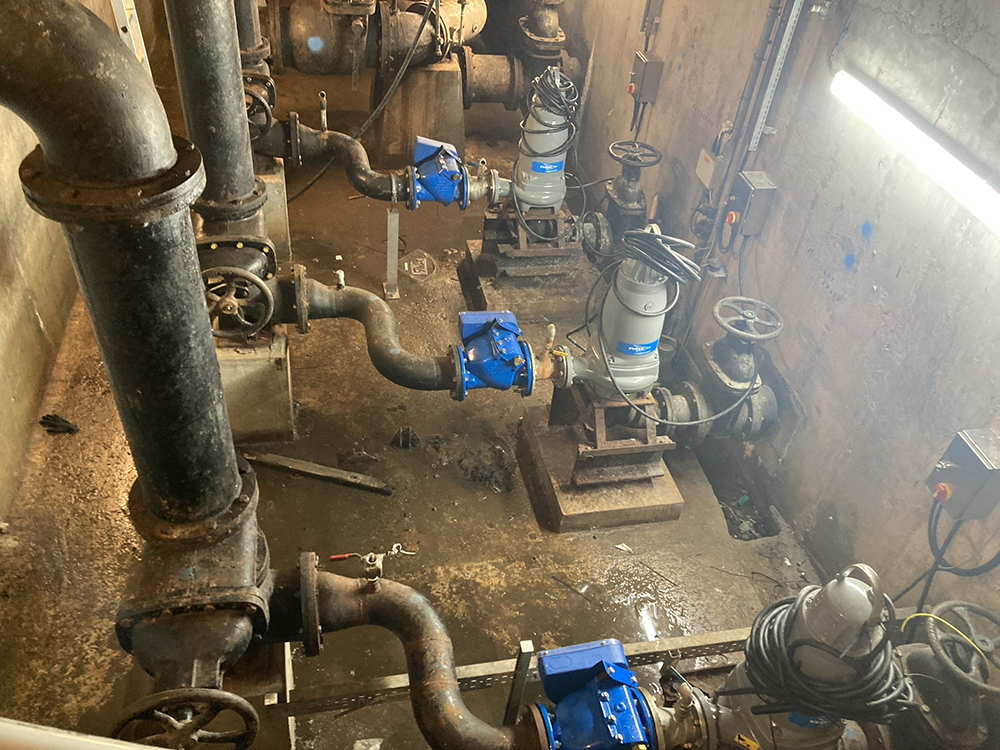
Dwr Cymru Welsh Water will roll out hundreds of intelligent pumping systems, following a successful deployment which delivered energy savings of 40%. The project demonstrates the evolution of pumping, says Synneve Henningson, Xylem.
As part of its commitment to enhancing customer service and protecting the environment, Dwr Cymru Welsh Water (DCWW) is significantly increasing investment in its wastewater operations.
The utility plans to invest £1.9 billion during AMP8 – the 2025–30 asset management period – nearly doubling the £1 billion committed during the previous five years.
This major investment targets significant pollution reduction, including preventing 186 high-priority storm overflows from harming the environment.
Innovative technologies, including intelligent pumping systems, are central to achieving these outcomes, as well as Welsh Water’s broader goals, such as energy reduction and achieving carbon neutrality by 2040.
Trial
DCWW manages a large wastewater infrastructure portfolio, including approximately 2,800 pumping stations and 800 treatment works.
Increased pressure from climate change and population growth has driven the need to modernise assets, build resilience and reduce operational risks including blockages, pollution events and flooding.
In 2020, DCWW partnered with Xylem to pilot the Flygt Concertor 6020 pump and Nexicon control panel at 10 problem-prone pumping stations.
These sites had experienced frequent blockages and required regular cleaning and maintenance.
Over the six-month trial:
Blockages were reduced at all sites – with one station reducing blockages from 53 to zero.
Site cleaning requirements dropped significantly across all locations.
The reduced need for ancillary equipment freed up capital for other investments.
Following this success, DCWW upgraded approximately 80 pumping stations with the new system – which has integrated sensing, control and communication capabilities – during AMP7.
Energy savings
DCWW reported the following improvements at the 80 upgraded sites:
Average energy savings of 40 percent
Significant reductions in vehicle miles and site visits, lowering carbon emissions
Improved resilience during storm and nighttime flows
Lower maintenance demand and fewer manual interventions
Standardised hardware and operations across sites – eight pump models now replace nearly 90 variants.
This standardisation has reduced complexity, enabled dual skilling of engineers and decreased reliance on specialist support. Engineers are now able to maintain systems independently, reducing downtime and support costs.
Wider rollout
Building on the strong performance of the initial rollout, DCWW plans to install Concertor systems at an additional 400 sites during AMP8, including the new, larger 6030 system – the first UK utility to adopt the model.
Welsh Water is now laying the groundwork for an intelligent, predictive operations model, with plans to integrate our cloud platform.
A spokesman says the roll-out represents an exciting scaling-up of intelligent systems and highlights how pumping technology is evolving.
“DCWW is setting a new standard in wastewater management – reducing pollution risk, reactive callouts, energy costs and carbon emissions, while building future resilience.”