



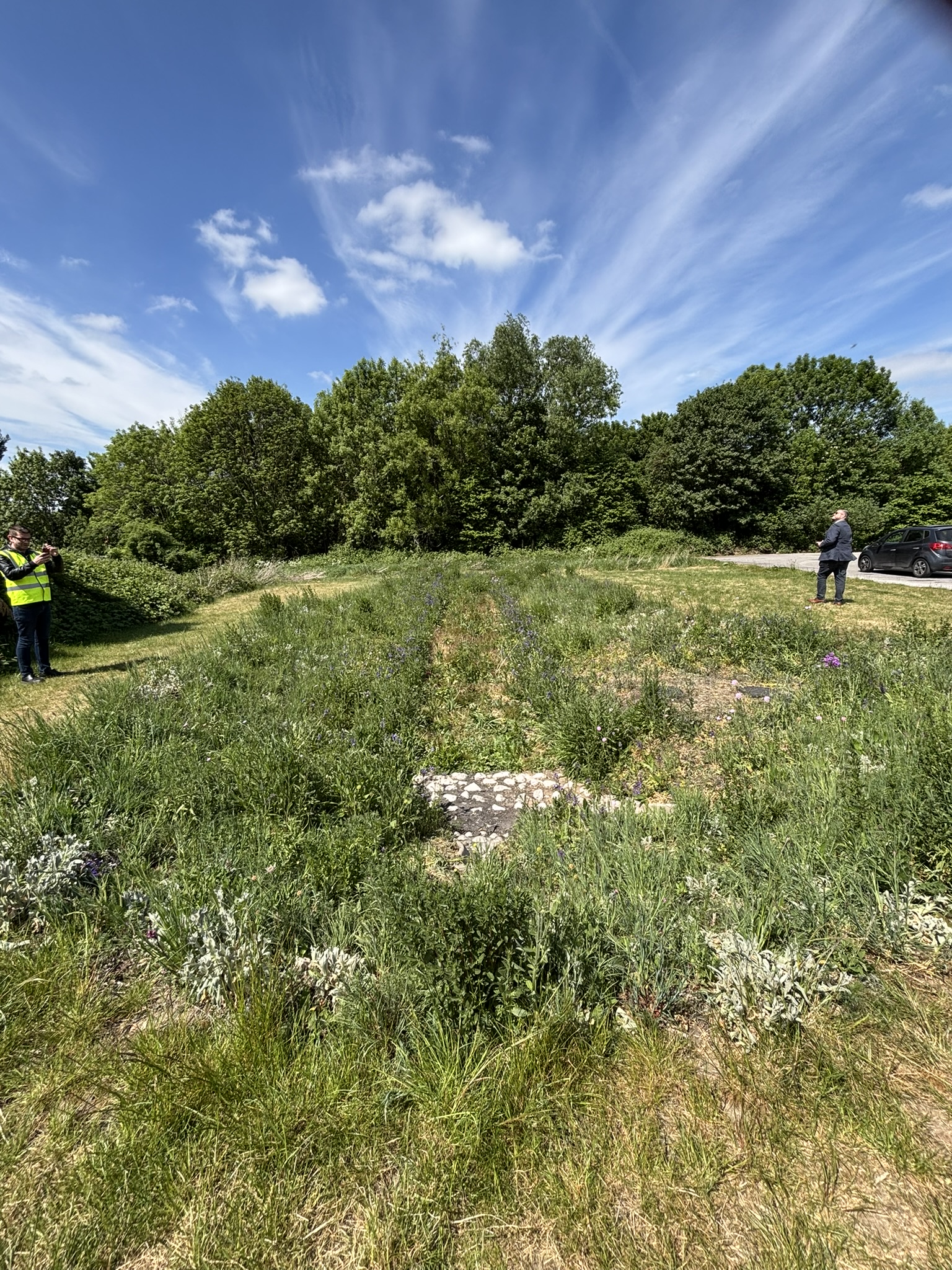
Devolution has allowed Wales to forge ahead on sustainable drainage (SuDS) and it’s time that England caught up says Jo Bradley, Convenor of British Water’s Sustainable Water Management Focus Group and Rainwater Management Technical Principal at United Utilities.
Schedule 3 of the Flood and Water Management Act may not sound like an obvious proving ground for the advantages of devolution but its adoption in Wales has allowed the Principality to deliver better sustainable drainage since 2019.
Implemented in response to the increasing risks of urban flooding and watercourse pollution, it’s transformed the conversation around SuDS for a nation of more than three million.
Because everyone knows that standards on SuDS are a mandatory part of the planning process, developers come to the table accepting that it’s part of every development, local authorities are developing expertise in effective design and cross-country committees are starting to share best practice, boosting standards across the board.
What we see in England, however, where standards are effectively voluntary guidelines, is that application is patchy and any implementation is generally focused on flood prevention rather than the other benefits of biodiversity and amenity that good quality SuDS can also deliver.
Standards on, or even the existence of, SuDS essentially vary between local authorities and between developing companies with some of the latter happy to include them and others vociferous in pushing back.
Similarly funding and responsibility for building and maintenance is equally patchy with roles often split between councils, developers and water companies. Divided responsibility is a recipe for lack of maintenance and lower benefits.
The result can be delivery of inadequate schemes, which also means that the people that live and work alongside them become frustrated when systems are neglected and fall into disrepair over time.
While there’s understandable social and political pressure to build as many houses as possible, in the short-, medium- and longer-term high-quality SuDS are an essential part of making our housing stock resilient in the face of climate breakdown. Good SuDS will help us cope with more intense rainfall, reduce flooding risk as well as making the places where people live, more pleasant and more biodiverse.
England has long had the option of implementing Schedule 3 for many years and it’s time that it did because the benefits are huge. Research by the team at CIWEM and Enabling Smart Water Communities identified that if high-quality SuDS were delivered consistently across around 1.3 million new homes, they could generate £247 million per year in water, environmental and amenity benefits.
Of course, the situation in Wales isn’t perfect but isn’t that the point of devolution, different areas of the UK take a different approach, and everyone learns from the experience.
A review by the Welsh Government has found that there’s scope to be even better including by improving training for SuDS Approval Bodies (SABs), enhancing implementation across Highways projects and a more consistent approach to the pre-application process of review. Other improvements could improve include better data collection, clearer guidance and even greater sharing of lessons learnt and best practice.
So rather than continue to resist, maybe England should start modelling itself as akin to Apple, which has consistently been late but better with mobile innovations.
What if we could overcome resistance by recognising that, while England wasn’t the first part of the union to implement compulsory SuDS, it can learn from others’ experience to develop a simpler, easier to use model that could become the industry standard.
Funding and maintenance, for example, are certainly something that we can look at to make the process more equitable for all parties as part of that review.
At the moment, the cost of SuDS installation falls primarily on the developers while responsibility for long-term maintenance often passes to local authorities, private companies or other asset owners.
This separation between costs and benefits can create misaligned incentives: developers are incentivised to minimise upfront cost, while those responsible for maintaining the assets may have had little influence during the design stage, which has huge consequences for later management.
Isn’t it time for everyone involved to come together, to discuss how we can make the experience in Wales the blueprint for a better approach to SuDS – one that develops learnings, shares those lessons with all sides of the debate, provides clarity and consistency for developers and leads to better planned developments?
Sustainable drainage may not be top of mind as we experience a summer of incredibly low rainfall and record high temperatures but the same climate breakdown that’s giving us a dry summer, will at some point give us record rainfall and flooding.
SuDS is the solution that will keep us and our homes safe, but only if we do it properly. That’s why Schedule 3 is so important.