



Tackling the toughest challenges in wastewater network management
Across the wastewater sector, operators face mounting pressure to reduce pollution, improve efficiency and maintain compliance in the face of aging infrastructure and changing weather patterns. The challenge is particularly acute in sewer networks and wastewater pipelines, where system complexity, difficult to access locations and growing environmental expectations create daily operational complications.
For many, the key issues are consistent: accurately identifying and locating wastewater leaks, assessing pipeline condition and extending monitoring coverage across vast and remote networks. Together, these challenges form one of the biggest barriers to reliable wastewater management.
The hidden cost of uncertainty
In wastewater systems, even small leaks can cause big problems. Water spillage, infiltration, contamination and environmental harm all add up. Yet traditional monitoring methods make it difficult to pinpoint where issues occur. Acoustic systems, flow balancing and manual inspections provide data but often lack the precision or timeliness needed to act quickly.
As networks grow older, the stakes rise. Many wastewater pipelines were never designed for the demands they face today. Corrosion, ground movement and hydraulic stress contribute to deterioration and without continuous insight into asset condition, failures can appear sudden and unpredictable.
Compounding the challenge is scale. A water utility’s wastewater network may span tens of thousands of kilometers, crossing cities, rural land and sensitive environments. Installing reliable instrumentation and communications infrastructure across such terrain requires expertise in both engineering and data management. For many utilities, the result is partial visibility: knowing that problems exist, but not exactly where or when they’ll emerge.
Technology that brings clarity
Meeting these challenges requires the seamless integration of high-quality hardware and intuitive software, turning raw pipeline data into actionable insight. One recent project demonstrates how this approach delivers immediate value in the field.
Use case: UK rising sewer main
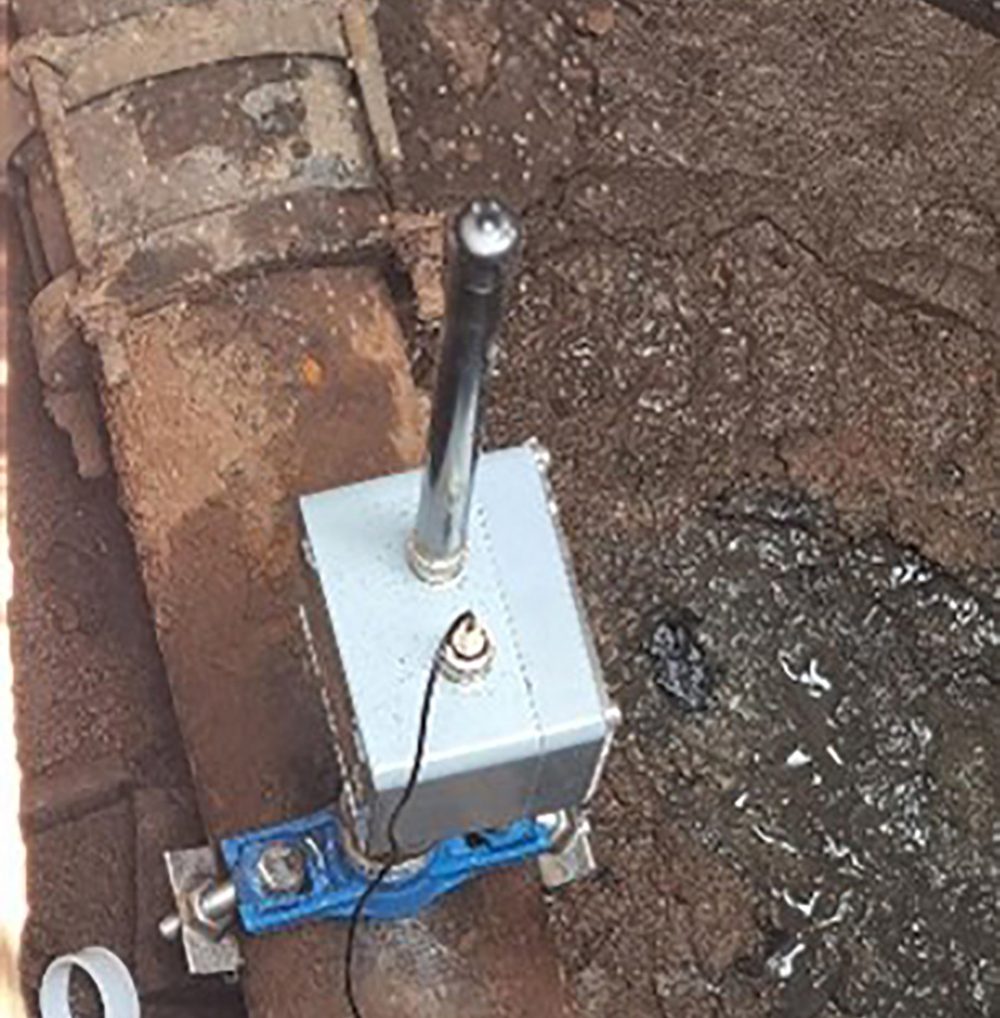
A wastewater utility company identified rising sewer mains that had a history of unpredictable bursts, which in turn risked causing serious pollution events. They required data and analysis to understand the operational conditions that led to those burst events. Access to these locations was limited and existing data loggers provided only partial information. To improve visibility, Atmos installed compact monitoring units capable of recording high-frequency pressure, flow and pump vibration data and transmitting it securely via 4G (see Figure 1).
Once deployed, the devices began streaming continuous measurements from multiple chambers across the network. The data was visualized in Atmos’ cloud-based platform, where operators could view performance trends, including high resolution 60Hz data as well as average and peak-to-peak pressure and vibration, in near real time (see Figure 2). The intuitive dashboard turned thousands of data points into simple, clear insights that revealed the network’s hydraulic behavior.
Within days of installation, the system began highlighting irregular pressure behaviour during pump idle conditions. The pattern suggested a potential leak that repeatedly opened and closed in quick successions, something traditional inspections would likely have missed. Although the issue was not visible at ground level, the system’s sensitivity enabled early identification of the leak. With a single unit in place, the event could not be precisely located using the negative pressure wave technique, which requires two units for pinpoint accuracy. Despite this limitation, the early detection allowed the maintenance team to act quickly and mitigate further damage.
The project demonstrated how combining reliable hardware with intelligent software provides a deeper understanding of wastewater network performance. By connecting sensors, communications and analytics in one ecosystem, the operator gained a clear view of conditions across previously hard-to-monitor assets. This approach supported faster decision-making, prioritized maintenance and delivered measurable operational savings.
The case also highlights the growing value of continuous monitoring in wastewater management. With accurate, real-time data, operators can move from reactive repairs to proactive asset care, improving service reliability and protecting the environment from unintended discharges.
Towards a smarter, more sustainable wastewater network
As wastewater network challenges continue to grow and wastewater pipelines continue to age, these integrated monitoring systems will play a vital role in helping utilities maintain efficiency, compliance and environmental stewardship.
Given the UK government’s proposal to impose fines of up to £500,0001 and possible imprisonment,2 continuous monitoring solutions are both cost-effective and necessary.
atmosi.com
References
1 https://www.gov.uk/government/news/new-financial-penalties-for-environmental-offences
2 https://www.gov.uk/government/news/polluting-water-bosses-face-up-to-two-years-in-prison