



A range of advanced technologies are available to help utilities tackle NRW effectively, focusing on pipe condition assessment, leak detection, and pressure management, says Laura Dority, Mueller Water Products.
of the most significant challenges facing water utilities, with losses stemming from ageing infrastructure, undetected leaks, and inefficient pressure management.
Pipe Condition Assessment
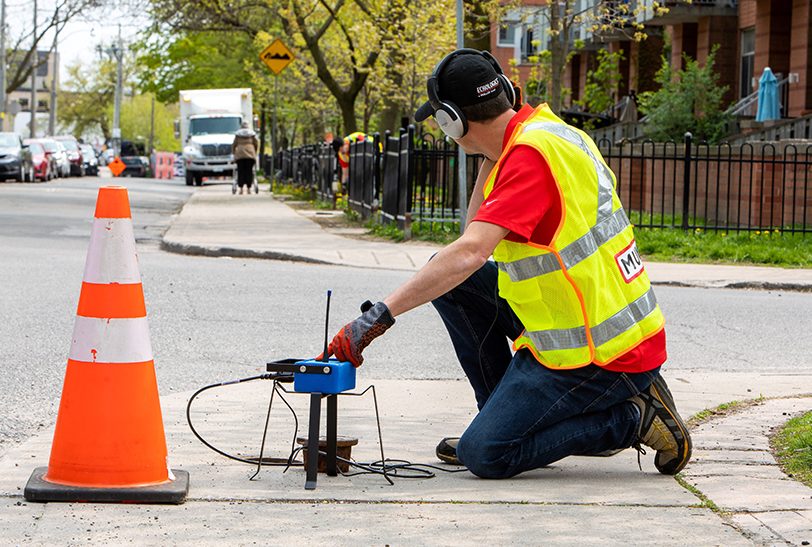
One of the foundational steps in reducing NRW is understanding the current state of the water distribution network. Pipe condition assessment technologies, like ePulse, provide utilities with data-driven insights to prioritise maintenance and replacement efforts.
Acoustic condition assessment is a non-invasive technology using audio wave propagation to evaluate the structural integrity of pipelines.
By inducing low-frequency acoustic waves and measuring their velocity through the pipe wall, the technology can estimate the remaining wall thickness and structural strength of various pipe materials, including asbestos cement (AC), cast iron (CI), ductile iron (DI), steel, and prestressed concrete cylinder pipe (PCCP).
The system identifies areas with structural weaknesses while simultaneously detecting existing leaks, enabling utilities to focus resources on the most at-risk segments. This targeted approach is far more cost-effective than age-based replacement, which can result in replacing pipes that are still in good condition.
This technology provides a detailed report, including leak locations, percentage wall loss, and qualitative assessments (good, average, poor) for each pipe tested. If historical installation data is available, the estimated remaining service life of each segment is also provided.
This approach allows utilities to extend the life of their assets and avoid unnecessary expenditures on pipe replacement. Replacing the worst pipes first is the best way to reduce NRW in the long-term.
Leak Detection
Early and accurate leak detection is essential for minimising water losses and preventing catastrophic failures. Permanent acoustic monitoring systems have improved this aspect of NRW management over the last decade.
For example, the EchoShore® permanent leak monitoring system uses sensors that can be deployed on fire hydrants or valves, making use of existing infrastructure for comprehensive coverage. The system employs advanced acoustic analysis and AI-driven algorithms to identify leaks as they develop, sending real-time alerts to utility operators via the Sentryx™ Water Intelligence platform. This proactive approach allows for early intervention, reducing repair costs, environmental risks, and water loss.
There are two options based on pipe size. One is designed for distribution lines, enabling utilities to identify leaks early, monitor their progression, and prioritise repair schedules.
The other is tailored for large transmission mains (16 inches and above), it uses sensitive hydrophone sensors to monitor critical supply lines, including those crossing bridges, major roads, or serving industrial areas. This system is particularly valuable for mains with a history of rupture or where service disruptions would have significant consequences. The sensitivity of the hydrophones allows for larger spacing of sensors, an average of half mile between access points.
All data is sent and processed in the platform that is used to monitor, control, operate, and monetise the water distribution network.
Intuitive dashboards with mapping make it easy to visualise data. It provides KPI dashboards, sensor status, and there is a mobile app for field crews to update investigation results and upload photos, streamlining the entire leak management process. The Echoshore platform is assisted by human data analysis as well.
Each site is monitored by a dedicated analyst that reviews alerts in the network. This added layer of review reduces false positives leading to a best in class hit rate of over 80%.
Pressure Monitoring and Management
Pressure management is a proven strategy for reducing leakage and pipe bursts, both major contributors to NRW.
i2O® advanced pressure management integrates real-time flow and pressure data with cloud-based analytics. By creating a flow-related head-loss curve, the system’s controller dynamically adjusts the pressure reducing valve (PRV) outlet pressure to maintain target pressures at critical downstream points in the network.
The algorithm updates daily, ensuring optimal pressure settings as demand fluctuates. This approach minimises over-pressurisation, which is a leading cause of leaks and bursts, and ensures stable, efficient network operation.
The PRV monitoring and control systems deliver more accurate, stable, and smooth pressure control, resulting in fewer leaks, reduced open-tap demand, and extended pipe life. Pressures in a network fluctuate daily and without real time control, most water systems operate at higher pressures than needed especially at night. By limiting pressure to only what is needed the overall leakage in a system is reduced and fluctuations in pressure are minimised.
muellerwaterproducts.com