




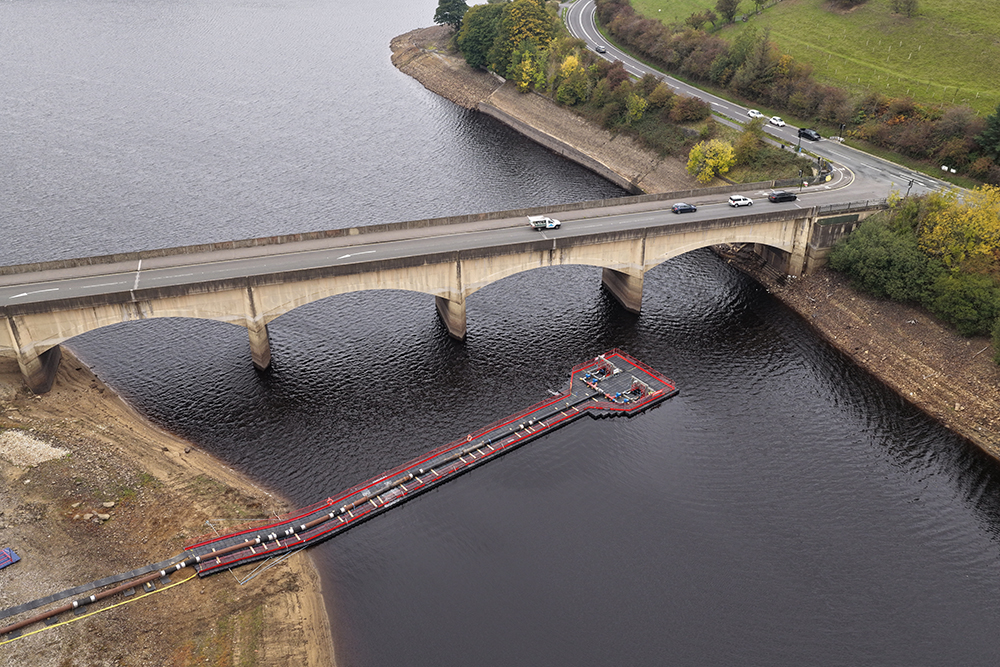
Selwood was approached by Severn Trent Water to provide an overpumping solution from Ladybower Reservoir to the Yorkshire Water distribution main. This was required because the pumps currently installed were unable to abstract flows when reservoir levels dropped.
The challenge
- Low reservoir levels
- Fluctuating levels after abstraction starts
- High flows required of 462l/s
- Busy public location
- Overgrown woodland where we were installing our rising main
The solution
Selwood’s expert teams developed a solution through close collaboration with the client and its supply partners. By utilising a floating pontoon, they were able to position the pump units 200m into the reservoir at its deepest point and design the pipework to accommodate both the flex and fluctuating water levels.
A floating pontoon was installed to enable the team to abstract from the deepest part of the reservoir. Pipework was designed to include flexible parts, which enabled flex on the rising main.
Four submersible pump units provided flows to a holding tank on land. Booster pumps were then used to transfer the flow to the final discharge point. This was done to reduce the pump and pipe size required on the pontoon to ensure it wasn’t too heavy.
Selwood’s project team coordinated install teams and ensured health and safety was upheld to its high standards at all times.
Working with Severn Trent Water’s supply chain, the teams cleared a path with specialist equipment through woodlands and utilised areas which were already available to reduce any environmental effects.
The result
The solution ensured that Severn Trent Water was able to provide the contracted flows to Yorkshire Water.
This setup was designed to allow the water level to drop without requiring any amendments to the installation, this is due to the flexible rising main and use of the pontoon. The flow can be varied depending on the demand, enabled by the control philosophy built into the solution.
selwood.co.uk