



Experts often need to investigate the pollution in rivers, oceans, underground water, and other sources of water to determine the cause of environmental deterioration and potential health hazards. Environmental regulators therefore require a reliable and efficient way to measure pollutants, using reference values and measurement methods stipulated by law.
Increasing pressure from industrial activity, agriculture, and population growth has made this requirement more urgent, with water quality now directly linked to environmental protection, food security, and public health.
Traditionally, water analysis has relied on laboratory-based chemical and biological methods. While highly accurate, these approaches require sample collection, transport, and preparation, often resulting in delayed feedback and limited visibility of short-term fluctuations in water quality.
In response, there has been a clear shift toward optical and spectroscopic techniques that enable faster, real-time, and in-situ monitoring.
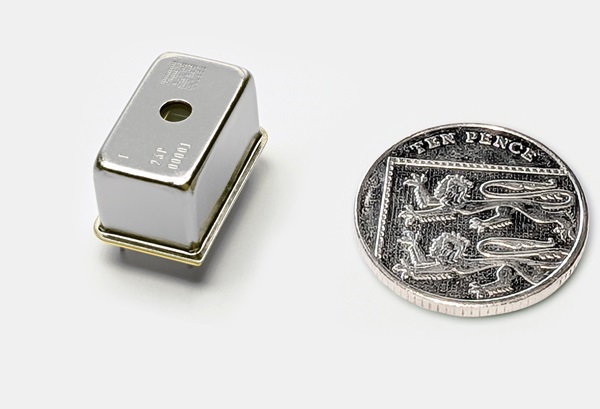
To support this, Hamamatsu provides high-sensitivity optical sensors and high-luminance light sources for water quality inspection equipment that detects pollutant components in trace amounts.
These technologies enable a range of light-based methods used to inspect and measure water quality, many of which rely on well-established scientific principles but are now being applied in compact, portable, and continuously operating systems.
At the core of many of these techniques is ultraviolet (UV) absorption measurement. Dissolved organic molecules commonly exhibit strong absorption in the ultraviolet range, making this an effective method for determining organic pollutants in industrial drainage and river water.
UV-Vis spectrophotometry allows rapid analysis and is increasingly used for real-time monitoring applications.
This same principle extends to total nitrogen measurement. By converting dissolved nitrogen into nitrates, UV absorption spectroscopy, commonly at 220 nm, can be used to quantify nitrogen levels.
The need for this conversion step reflects a broader analytical challenge: many contaminants cannot be directly measured and must first be transformed into detectable forms, adding complexity to water analysis workflows.
Phosphorus measurement introduces further challenges. Dissolved phosphorus is typically measured indirectly by treating the sample to produce molybdenum blue, with absorption measurements around 880 nm correlated to concentration.
This reliance on chemical reactions highlights a key limitation of some parameters, where fully optical, direct measurement remains difficult and hybrid approaches are required.
Alongside absorption-based methods, fluorescence measurement provides an alternative route for detecting specific pollutants such as oil content and polycyclic aromatic hydrocarbons (PAH).
By irradiating ultraviolet light onto factory and vessel drainage and measuring the resulting fluorescence, this method can achieve high sensitivity for compounds that emit characteristic light signatures, particularly at low concentrations.
For trace-level elemental analysis, more advanced spectroscopic techniques are employed. Atomic fluorescence spectrometry (AFS) detects light reemitted by atoms after excitation, enabling the measurement of elements such as mercury with sensitivity down to parts per trillion.
Atomic absorption spectrometry (AAS), by contrast, measures the absorption of light by atomized samples and is less susceptible to spectral interference. Together, these techniques illustrate how different optical methods are selected depending on whether sensitivity, selectivity, or robustness is the primary requirement.
The effectiveness of these analytical approaches is closely tied to the performance of the underlying optical components. In UV-Vis spectroscopy, the choice of light source is particularly critical.
Broadband emitters such as xenon flash lamps provide a wide spectral range, from ultraviolet through visible and into the infrared, allowing multiple water quality parameters to be detected simultaneously.
Compared to traditional deuterium lamps, xenon flash lamps offer shorter warm-up times, longer lifetimes, and greater suitability for portable and field-deployed systems, making them increasingly important in modern monitoring applications.
These developments are driving a wider transition in water quality monitoring—from periodic, laboratory-based testing toward continuous, in-situ measurement. Optical techniques, particularly UV-Vis spectroscopy, offer the advantage of being fast, and suitable for integration into compact devices.
As a result, they are increasingly deployed in real-time monitoring systems that provide immediate feedback, enabling faster response to pollution events and improved process control in water treatment facilities.
Together, these technologies form the foundation of modern water analysis systems. By combining multiple optical measurement techniques with high-performance light sources and detectors, it is possible to detect a wide range of pollutants at trace levels while maintaining the speed and flexibility required for real-world applications.
As regulatory demands tighten and the need for sustainable water management grows, the role of optical spectroscopy in ensuring water quality is set to become increasingly central.
For more information: https://www.hamamatsu.com/eu/en.html