




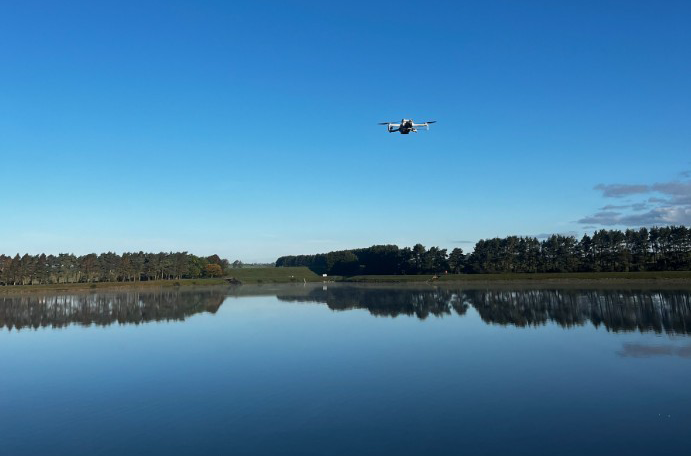
A world-first system combining automated drones, robotics, real-time sensors and rapid shore-side testing is set to transform how UK coastal bathing waters are monitored.
The Smart Skies, Healthy Waters project is developing a pioneering “lab-in-a-box” that will give water companies a faster, clearer and actionable picture of what is happening in coastal waters.
Led by Northumbrian Water, with partners including water intelligence firm Kohtari, the collaboration secured an award of nearly £6m from the Ofwat Innovation Fund in May 2025.
Since then, the project has made significant progress, showcased at an event in June, and hosted by knowledge sharing partner Spring Innovation.
Steve Blanks, emerging tech product manager & IS innovation lead, Northumbrian Water, said: “One year on from receiving Ofwat funding, Smart Skies, Healthy Waters is moving at pace from design towards practical application.
“By harnessing new technologies to enable more frequent monitoring of bathing waters, the innovation represents a step change for our sector, offering a new approach to water intelligence.”
Collaboration between water companies, technology partners, and innovation leaders is central to the project’s success.
Specialist partners also include Skyports Drone Services, Tharsus, Proteus Instruments, Newcastle University, United Utilities, South West Water and Southern Water.
Lab-in-a-box innovation
Now well into the design phase, the Smart Skies, Healthy Waters coastal monitoring system connects autonomous drones, intelligent robotics and rapid water testing technologies to provide a more complete and balanced view of water quality.
At the heart of the innovation is a fully equipped, mobile lab-in-a-box – a deployable shipping container-housed laboratory that can be positioned along coastlines.
This testing facility is where several elements of the programme will come together for three forms of monitoring:
Real-time environmental data streamed to the cloud
Drone-enabled grab sampling for rapid micro-testing
Sample handover for lab analysis carried out by a robotics system
Autonomous drones will use a sonde to measure water quality in near real-time, as well as collecting water samples from coastal locations, returning them directly to the lab-in-a-box via a dedicated docking station.
Robotic systems will then automatically process the samples for collection and testing at UKAS accredited labs. The project is also looking at how to incorporate rapid microbiology testing within the overall system, to add a third level of analysis for a triadic approach
The insights will support real-time reporting, as well as predictive water intelligence, helping companies identify emerging risks earlier.
Artificial intelligence will also be used to build a clearer picture over time, by learning how different environmental conditions and chemical and biological water quality parameters interact, helping identify the patterns that can lead to poor water quality.
In March 2026, the project reached a key technical milestone with the filing of a patent for a component of the solution. It was also shortlisted for Best Real-Time Water Quality Monitoring Project at the Environmental Monitoring Awards 2025.
World-first response
Kohtari spokesman James Sumsion said: “Right now, a lack of digital visibility for coastal water quality monitoring creates risk for public health, the environment, local economies and company reputations – this project is our world-first response to that challenge.
“By monitoring coastal waters continuously and at scale, we can build a far richer picture of changing conditions than is possible with current methods, creating a new way forward for water quality monitoring.
“The entire process is designed around traceability and trusted handling, helping ensure strong compliance and confidence in the data produced.
“As well as having an expert team of partners, the project has benefited from valuable input from various other voices, from regulators to coastal businesses, helping us keep in mind the bigger picture – open water quality data is vital to everyone.”