




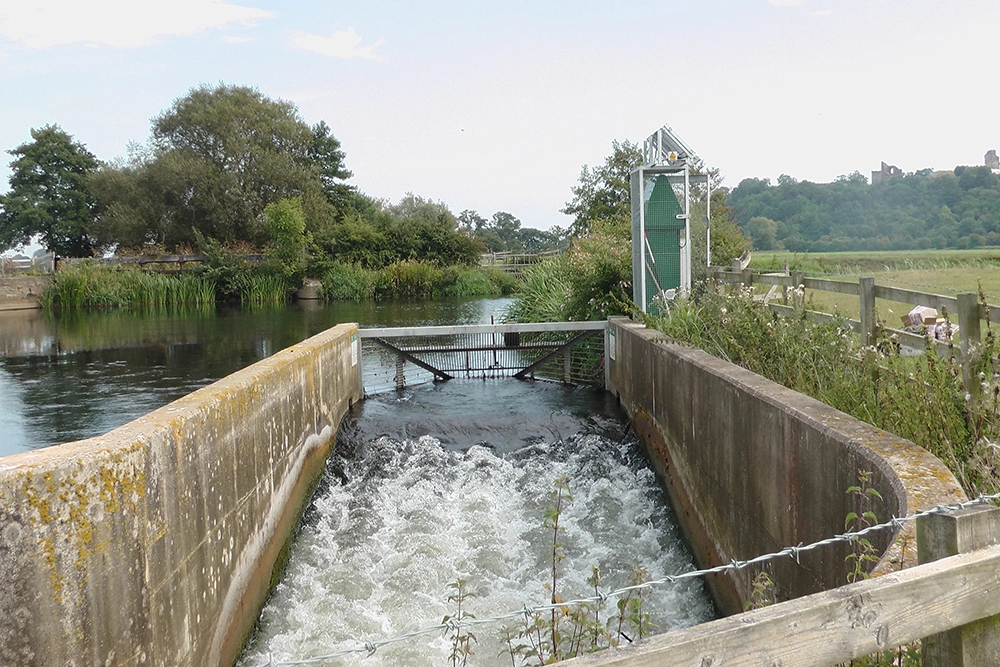
Dr Lee Juby, CEO at Fuel Cell Systems, looks at the power sources that keep water monitoring equipment running across a range of real-world situations, and investigates the future of water quality monitoring in the UK.
Water monitoring has never been more important, or more scrutinised, meaning that there’s renewed interest in the infrastructure that supports it.
Water levels, bacteria count and flow rates are all quietly and continuously monitored by specialised gauges and devices. However, monitoring programmes start to go wrong when the equipment they depend on loses power: water company technicians spend hours driving to replace batteries, bathing spots are closed and communities can be at risk of missed river flood warnings.
Legislation and public expectation are helping to clean up watercourses that are central to communities across the UK, and together with climate change, are driving demand for more monitoring at more sites and putting operational pressure on the many organisations responsible for them. Ensuring equipment uptime is therefore one of the less visible but important challenges facing stakeholders in the water sector today.
Powering public-facing water quality monitoring
In early 2025, the Environment Agency (EA) and the River Severn Partnership launched the UK’s first daily, automated bacteriological monitoring pilot on the River Teme in Ludlow. The site had previously been rated ‘poor’ for bathing water quality, and water monitoring had been carried out manually once per week.
The people who swim, walk and live alongside the river had a clear interest in what the sensors were recording, and in increasing the frequency with which measurements could be made. Using new technology, sensors now record bacteria levels, rainfall and river flow, and the data is made publicly available in real time via a mobile phone app.
The sensors in the pilot system are powered by batteries that are kept charged by direct methanol fuel cells. These fuel cells are the reason the system can run continuously at a riverbank location without EA staff having to replace batteries, and why there’s power to continuously transmit data to the community.
The monitoring delivers its value to wild swimmers, regulators and the communities along the river precisely because it stays online. The success of the project has resulted in an extension of the trial beyond its initial timeline, along with two new sites added to the project’s focus.
Complementing renewables to eliminate call-outs
Among other things, the success of the River Teme project shows the importance of choosing the right power solution. While it might be tempting to think that micro-renewables could also be used alongside batteries, the picture isn’t so clear-cut – in no small part thanks to our patchy UK weather.
Wessex Water supplies treated water to over 1.3 million customers across the south-west of England. At one of its remote sites in Wiltshire, monitoring equipment drew power from a combination of two wind turbines and a solar panel array. This worked fine during the summer, but in the winter months – when solar output fell – the system’s batteries quickly depleted, and maintenance teams had to routinely visit the site to replace or recharge them.
A change of approach eliminated this hassle and the cost of site visits. A direct methanol fuel cell with 56 litres of methanol was added in parallel with the existing power sources, creating a hybrid power system that could run for months without a visit from a maintenance team. The renewable sources are fully utilised when they’re available, but when power drops, the battery kicks in, supported by the fuel cell.
Flood warnings and overflow legislation
As the UK’s climate changes, increasingly wet weather and heavy rainstorms underscore both the importance of flood monitoring, and the power solutions chosen to support it.
Direct methanol fuel cells have been deployed at many flood monitoring sites, including EA monitoring stations at Kingston upon Thames, Haxted Mill, and in East Kent, where they help to protect communities downstream with continuous flood warning coverage. Sites like this need reliable power to warn of critical events, but also for longer-term modelling. Here, data is accumulated over decades, and must be accurate, detailed and without gaps to provide trend analysis for longer-term planning.
Many of the UK’s rivers often see negative quality readings after heavy rainfall. Due to a lack of sustainable urban drainage (SUDs) and ageing Victorian infrastructure in many locations, surface water runoff is combined with wastewater in pipes that can quickly become overwhelmed. To prevent backups, storm overflows are opened, and wastewater is fed into receiving watercourses.
Section 82 of the Environment Act 2021 has been introduced as a direct response, requiring water companies to monitor water quality upstream and downstream of storm overflows and sewage treatment works. The aim is to increase transparency and accountability, while improving water quality.
The timeline requires water companies to have quality monitoring at 25% of all impacted sites within the next four years, increasing to all sites by 2035. The rollout has, however, already started, focusing on high-priority locations like bathing water, sites of special scientific interest (SSSI) and special areas of conservation (SACs). Tens of thousands more remote water monitoring solutions will soon join the 15,000 event-duration monitoring (EDM) systems already measuring storm overflow frequency and duration across the UK, all requiring power to accurately collect data.
In many ways, Section 82 will bring about a foundational change to the way water companies operate, with internet of things (IoT) and cloud-based data-gathering tools becoming a central pillar of their legal obligations. Unreliable, or seasonally intermittent power that risks downtime will be untenable in the future of massively monitored water. Today’s successful applications can serve as a guide for the best approach and solutions to use.
Fuel cells for the future
The water sector is under more scrutiny than it has been for a generation, and the organisations doing monitoring work need power solutions that are as reliable as the data they are trying to collect. As the number of monitored sites grows to meet the requirements of Section 82, the operational challenge of keeping them powered will grow with it, too.
Direct methanol fuel cells have shown, across a range of real deployments, that they can provide precisely the reliability needed, while also reducing the operational burden of ensuring uptime at large numbers of remote sites across wide areas. See our case studies to see these deployments in more detail.