



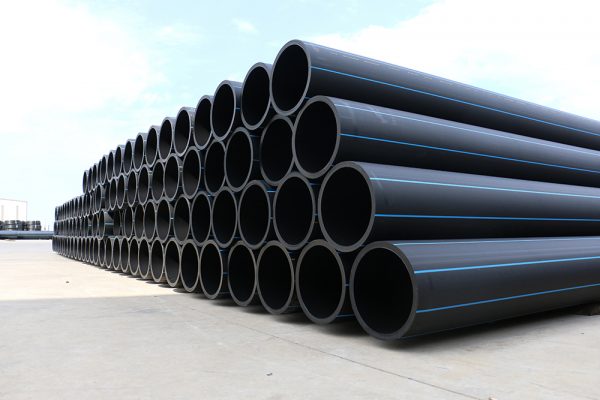
Water management is central to climate resilience and sustainable growth yet remains under-prioritised. If we want a genuinely green economy, pipeline technology and treatment systems must move from the margins to the mainstream, says Graham Morrell,
CEO, Flowmax Group.
Why water is front-page news
The UK’s regulatory investment cycle is shifting, and while AMP7 concentrated on leakage and supply security, AMP8 places treatment, effluent control and water-quality management front and centre.
This change is not abstract; it responds directly to growing public concern and a tightening enforcement environment.
Environment Agency data underlines the urgency. In 2024 there were 75 serious pollution incidents, a 60 per cent increase on 2023’s 47.
Three companies accounted for 81 per cent of those most serious breaches, Thames Water, Southern Water and Yorkshire Water.
Pollution incidents rose to 2,801 in 2024, up from 2,174 the year before. These trends reflect structural issues, persistent under-investment, ageing assets and poor maintenance. When rivers and reservoirs are harmed, the environmental, financial and reputational costs are immediate and severe.
The cost of failure
Discharges that damage ecosystems and public trust expose utilities to remediation costs and enforcement action and erode long-term confidence in the sector.
Effluent treatment is the frontline defence for protecting waterways and wildlife. It’s not a regulatory checkbox; it’s a duty of care. Effective primary and secondary treatment, solids removal, chemical dosing and reliable containment systems reduce the risk of harmful discharges.
Where treatment is weak or assets are ageing and poorly integrated, the consequences are financial penalties, reputational damage and lasting harm to ecosystems.
AMP8’s emphasis on treatment means utilities must prioritise upgrades that deliver measurable reductions in pollutant load. That includes better hydraulic control, improved screening and enhanced chemical and biological treatment steps.
For contractors and suppliers, the opportunity is to provide prefabricated treatment skids, robust containment solutions and chemically resistant piping that together simplify compliance and reduce operational risk.
Small choices, big outcomes
Material choice matters. Thermoplastic pipework offers corrosion resistance, longer operational life and faster installation in aggressive environments, advantages that reduce interventions and lower whole-life cost.
But materials alone are not enough. Prefabrication and offsite-assembled modules are meaningful differentiators for AMP8 delivery, factory-built sections arrive pressure-tested and ready to install, speeding delivery, improving quality and lowering on-site errors that later become pollution vectors.
Physical upgrades must be matched by digital capability. Sensors, telemetry and condition-based maintenance let operators target resources where risk is highest, whether that’s monitoring untreated inflow, tracking process performance through treatment stages, or validating the quality of final discharges.
The monitoring of both input and output streams is critical; it proves systems work and enables rapid containment when anomalies appear.
Digital twins and integrated asset-management platforms help model networks, predict weak points and prioritise interventions with precision.
Moving from calendar-based fixes to data-driven maintenance reduces surprise failures and shortens response times when incidents occur. In an era of heightened scrutiny, transparent audit trails from monitoring systems are also invaluable for demonstrating compliance.
UK context and global urgency
The technical and regulatory pressures we face in the UK are mirrored and magnified elsewhere. In emerging economies such as South Africa, potable water is an increasingly scarce resource. Climate change is driving hotter, drier conditions in many regions and placing new stress on supplies. That is driving a practical shift, more focus on production as well as distribution, including a growing role for desalination.
Reverse osmosis and modular desalination are becoming more viable for coastal and water-stressed regions, supporting drinking water and irrigation needs. Desalination brings its own challenges, notably energy demand and brine disposal, but when paired with efficient pipeline systems, localised treatment and leak-free distribution it becomes a practical tool to expand safe water access as rainfall patterns change.
Policy moves such as domestic content rules and reshoring initiatives are reshaping supply chains. That can add cost and complexity for operators used to global sourcing, but it also stimulates investment in domestic manufacturing and faster delivery. For specialist fluid-handling and pump manufacturers, this creates demand for higher-spec, rapid-delivery products that meet tighter procurement standards.
What AMP8 and 2026 will require
As AMP8 gathers pace and we move into 2026, the challenge for utilities, contractors and suppliers is clear, shift from intention to delivery. The next phase of investment will demand integrated, high-performance material solutions, advanced thermoplastic systems, prefabricated treatment modules and monitoring packages that work together. Getting material and system choices right at the outset will be critical to reducing installation risk, simplifying compliance and ensuring consistent standards across sites and regions.
As we move into 2026 and beyond, the test is simple, turn commitments into delivery. AMP8 sets the immediate regulatory and investment framework, but the real work is on the ground, installing the right materials, upgrading treatment systems and adopting digital asset management so incidents are prevented rather than merely managed. Those who offer integrated, repeatable solutions will reduce risk, cut whole-life costs and better protect rivers and communities.
This is both a commercial and societal opportunity. Investors and policymakers must align procurement and funding with technologies and materials that demonstrably safeguard water quality.
Contractors and specialist suppliers should scale resilient, high-performance systems that allow utilities to meet rising expectations under AMP8 and beyond.
Deliver on this, and we create brighter futures, for businesses, for communities and for the environment.