



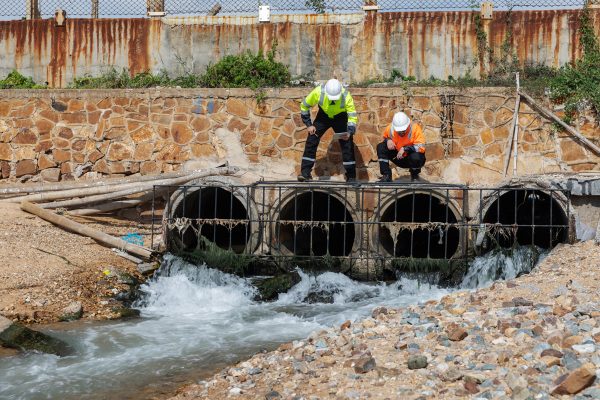
In today’s increasingly regulated and resource-constrained industrial landscape, water management has become far more than a compliance exercise. For facilities discharging wastewater—whether in manufacturing, food and beverage, or pharmaceuticals—maintaining control over both the quantity and quality of effluent is critical. Central to this control is the intelligent use of flow and turbidity data.
Flow data provides essential insight into how much water is moving through a system, while turbidity data reveals the clarity of that water—an indicator of suspended particles, contaminants, and overall water quality.
Individually, these parameters are valuable. Together, they unlock a far deeper level of understanding. By correlating flow rates with turbidity levels, operators can identify pollution events, detect abnormal discharge conditions, and gain a clearer picture of how processes impact effluent quality.
This is particularly important in industrial environments, where wastewater composition can fluctuate significantly depending on production schedules, raw materials, and operational changes.
One of the most important advantages of combined monitoring is early risk detection. Sudden spikes in turbidity, especially when linked with increased flow, can indicate the release of pollutants or process upsets before they result in regulatory violations or environmental harm.
Accurate monitoring helps facilities:
- Stay within discharge limits and avoid penalties
- Protect downstream infrastructure and municipal treatment systems
- Safeguard corporate reputation and environmental performance
Without reliable data, many facilities rely on estimates or delayed lab results, which can lead to overdosing chemicals, inefficient treatment, or undetected compliance risks.
Beyond compliance, flow and turbidity data play a critical role in process optimization. In systems where pre-treatment is required—such as chemical dosing or filtration—real-time monitoring allows operators to adjust treatment processes dynamically based on actual conditions.
For example:
High turbidity levels may require increased treatment intensity
Stable conditions may allow for reduced chemical use
This data-driven approach helps reduce operational costs, minimize waste, and improve overall system efficiency. In addition, it ensures that treatment processes remain aligned with actual pollutant loads rather than static assumptions.
The BlueEdge® suite of solutions from Badger Meter is designed to address these challenges by combining flow measurement, water quality monitoring, connectivity, and analytics into a unified platform.
Through advanced sensors and monitoring technologies, operators gain:
- High-frequency, real-time data on flow and turbidity
- Continuous visibility into system performance
- Actionable insights to support faster, more informed decision-making
Turbidity monitoring solutions, in particular, provide critical feedback on treatment efficiency and water quality, helping operators detect issues such as ineffective filtration or contamination events.
The future of water management lies in moving beyond reactive compliance toward proactive, data-driven optimization. Flow and turbidity data are at the heart of this transformation, enabling facilities to “see the unseen” within their processes.
By leveraging integrated monitoring solutions, organizations can not only meet regulatory requirements but also unlock new levels of operational efficiency, sustainability, and resilience.
In a world where water is both a critical resource and a growing risk factor, visibility is no longer optional—it is essential.
Learn more about BlueEdge here