



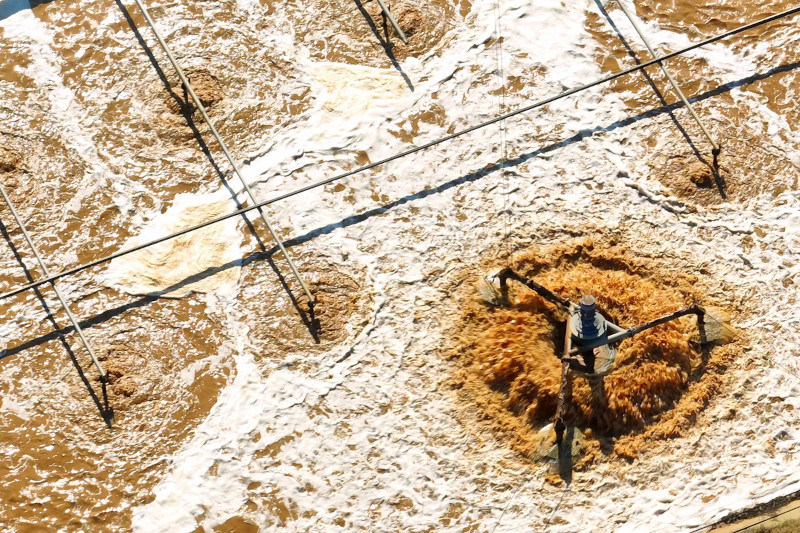
Industrial wastewater treatment is becoming increasingly complex. Across sectors such as pharmaceuticals, manufacturing and food processing, operators must balance strict discharge compliance, process efficiency and workplace safety—all while managing highly variable wastewater conditions.
At the center of this challenge lies a critical need: continuous visibility into both water quality and air safety conditions.
Industrial wastewater is far from uniform. Its composition can fluctuate significantly depending on production cycles, raw materials and cleaning processes.
Waste streams may contain:
- Organic compounds
- Nutrients and suspended solids
- Toxic chemicals, oils and surfactants
- Acids and alkalis
These variations make it difficult to maintain stable treatment performance and consistent discharge quality. At the same time, biological and chemical processes particularly in wastewater treatment can generate hazardous gases, introducing an additional layer of operational risk.
The result is a dual challenge to ensure clean, compliant water as well as to maintain a safe working environment.
Traditionally, many facilities have relied on periodic sampling and lab analysis to assess wastewater conditions. However, this approach creates a lag between cause and effect, limiting the ability to respond to process changes in real time.
Modern operations require a different approach: continuous, multiparameter monitoring.
By tracking key indicators such as total suspended solids (TSS), chemical and biological oxygen demand (COD/BOD), total organic carbon (TOC), pH, conductivity and dissolved oxygen operators gain immediate insight into treatment performance and effluent quality.
This real-time visibility enables faster detection of process upsets, proactive adjustment of treatment processes, reduced reliance on delayed laboratory results as well as improved compliance with discharge limits.
While water quality monitoring is essential, it is only part of the equation. Wastewater treatment processes—especially those involving biological activity—can produce gases such as hydrogen sulfide, methane or ammonia.
Without proper monitoring, these gases can endanger personnel, damage equipment, and lead to regulatory and safety violations.
Integrating gas detection systems alongside water quality monitoring provides early warning of hazardous conditions, helping facilities respond before risks escalate.
The real breakthrough comes from combining these data streams into a single, integrated monitoring strategy.
The BlueEdge® suite of solutions from Badger Meter brings together:
- Flow measurement
- Water quality monitoring
- Gas detection technologies
- Data communication and analytics
into a unified platform designed to deliver continuous, actionable insight.
Multiparameter monitoring systems enable operators to evaluate multiple water quality indicators simultaneously, while connected sensors and analytics tools provide real-time data visualization and decision support.
By adopting an integrated monitoring approach, industrial facilities can achieve:
Improved compliance
→ Continuous validation that discharge meets regulatory limits
Enhanced safety
→ Early detection of hazardous gases and dangerous conditions
Optimized operations
→ Data-driven adjustment of treatment processes for efficiency
Reduced costs
→ Lower chemical usage, reduced downtime and fewer compliance penalties
Greater resilience
→ Faster response to changing influent conditions and process variability
As industrial processes become more complex, the ability to monitor, understand and respond to changing conditions in real time is truly essential.
By combining water quality and gas monitoring into a cohesive, data-driven strategy, Badger Meter enables operators to move beyond reactive management toward proactive control of both environmental impact and workplace safety.
Cleaner water and safer air are not separate goals—they are two sides of the same operational reality.
Learn more about BlueEdge here