




The water industry is entering one of the most significant periods of investment and change in its history. But infrastructure and technology alone won’t deliver that change – people will.
Ofwat’s PR24 programme represents £104 billion of expenditure between 2025 and 2030, creating an enormous opportunity to improve infrastructure, resilience and performance.
Alongside that investment comes an equally significant workforce challenge. The water industry expects to recruit for 50,000 jobs by 2030, including 5,000 apprenticeships. At the same time, around 8,500 existing water company employees are expected to retire.
The challenge, therefore, isn’t simply attracting people into water. It is developing the skills they need, retaining the people already here and ensuring valuable industry knowledge is passed on rather than lost. Skills-based learning has an important part to play in the solution.
From knowledge to competence
The water sector is a practical industry. People working on networks need more than an understanding of what they should do. They need the confidence and competence to put that knowledge into practice.
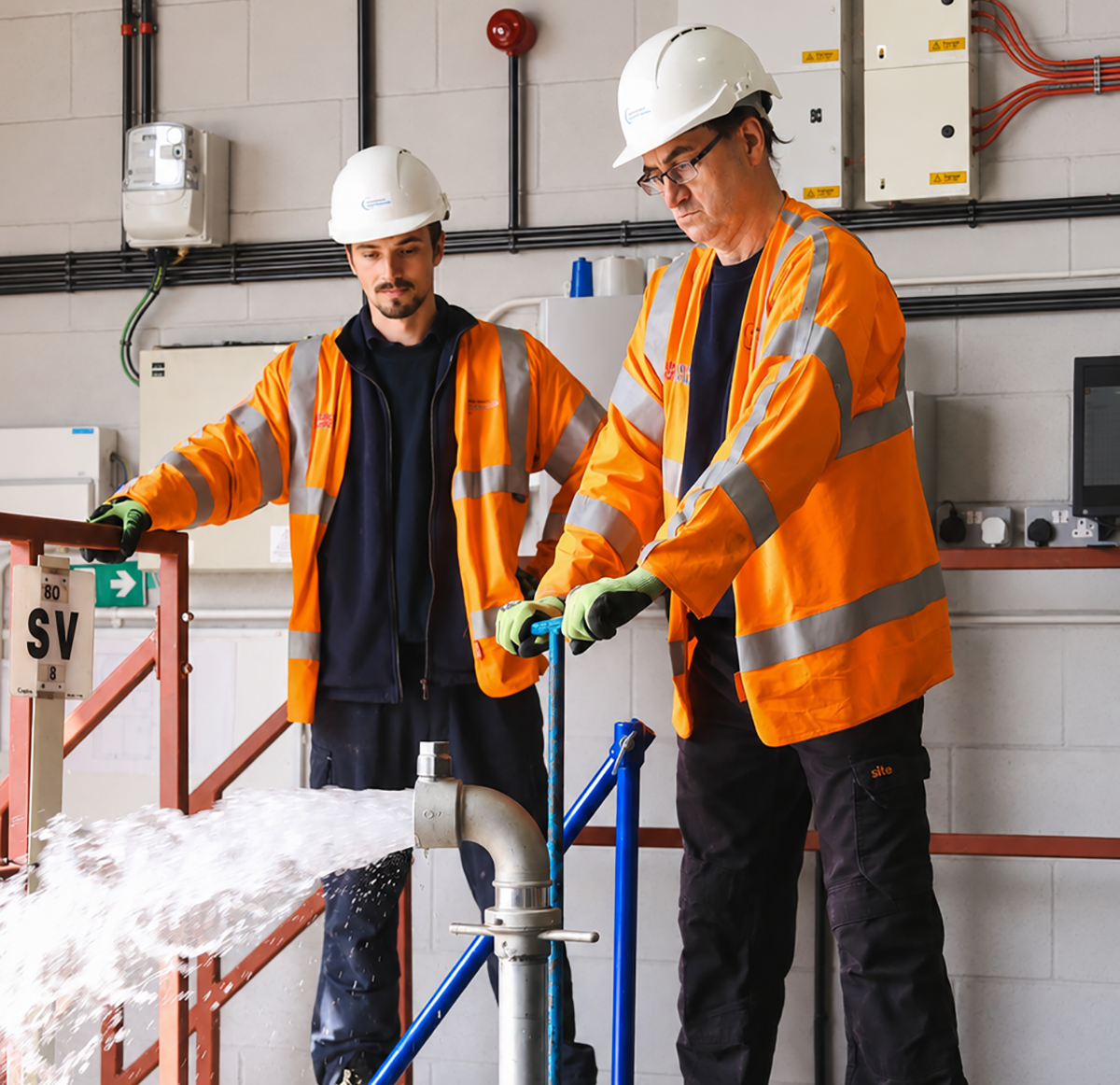
That principle sits at the heart of our approach. We believe that utilising our bespoke built water network training rigs, delegates are able to learn by doing. Delegates can work on a realistic network setup in a safe, controlled training environment.
Learners can operate and work on network assets, investigate network behaviour, develop correct techniques and explore the consequences of different decisions. It bridges the gap between theory and the real world.
Importantly, it also creates an environment where people have permission to learn. Delegates can ask questions, try techniques for themselves and learn from mistakes without the operational pressures or consequences associated with a ‘real world’ live water network.
That is where knowledge starts becoming competence and understanding.
Keeping experience within the industry
One of the water sector’s most valuable assets isn’t buried underground. It is the knowledge held by the people who have spent years working on its networks. Experienced operatives and technicians develop an understanding that is difficult to capture in an Operating Manual. They recognise how networks behave, know what to look and listen for, and understand how an intervention in one location can have consequences elsewhere.
As experienced employees retire or leave, there is a risk that some of this knowledge disappears with them. No training course can replicate decades of experience. But training can provide an environment in which that experience is shared.
Our trainers have worked within the water industry themselves. They can explain not only what should happen, but why it matters, what can happen when things go wrong and what experience has taught them.
Combine that with hands-on learning and delegates can see those lessons come to life. With thousands of apprentices and new entrants expected to join the industry, transferring that practical knowledge has rarely been more important.
Developing and retaining the people we have
Recruitment is only one part of addressing the skills shortage. The industry also needs to retain and develop its existing workforce. People want opportunities to progress, build skills and take greater responsibility. Investing in their development demonstrates that their contribution – and their future – matters.
For employers, that investment can create benefits throughout the organisation. Developing people internally can increase workforce flexibility, support succession planning and help prepare employees for vacancies before they arise.
Training should therefore be considered as more than compliance. Training shouldn’t simply result in another certificate. It should result in a more knowledgeable, capable and confident person.
Skills supporting assets
The importance of workforce capability becomes even clearer when considering the challenges the sector is being asked to solve.
Leakage reduction, asset health, water quality, resilience and operational efficiency will all benefit from investment in technology, equipment and data. But ultimately, people need the skills to use that technology, interpret the information and make the right decisions.
Whether it is operating a valve, flushing a main, taking water quality samples or any other network activity, understanding what is being done, the wider impact of the activity and recognising when something is not right are as valuable as the technology being used or the data being interpreted.
Practical training allows people to develop those skills and enhances the likelihood of knowledge retention.
Learn it. See it. Do it. Apply it.
This simple progression is central to our training philosophy.
Understand the principles. See how it happens and how the network behaves. Develop the practical skill yourself. Then return to the workplace with greater confidence to apply it.
Investing in infrastructure means investing in people
Investment in physical assets needs to be accompanied by investment in human capability. That means attracting new talent and developing them, but also ‘upskilling’ existing employees, providing meaningful opportunities for progression and creating better ways to transfer knowledge between generations.
There is no single solution to the water industry’s skills challenge. It will require collaboration between employers, training providers and the wider sector.
Training, however, can make a tangible contribution.
If learning is practical, relevant and engaging, we can help new entrants build competence and confidence. We can help experienced employees continue developing. We can create opportunities for valuable knowledge to be shared. And we can help organisations build the capability they need for today’s challenges and tomorrow’s vacancies.
At Gold Tap Training, that is what we want training to achieve.
Our ambition isn’t simply to deliver courses. It is to create learning experiences that make a difference when somebody returns to work.
The water sector is preparing to make unprecedented investment in its infrastructure.
We should be equally ambitious about investing in the people who will operate, maintain and protect it.
Invest in your people, and they’ll keep the water flowing.
Fore more information, please visit the website at www.goldtaptraining.co.uk.