


The water industry is investing heavily in technology to protect clean water networks by introducing advanced leak detection tools, smarter asset management systems, and increasingly sophisticated monitoring of water quality.
These innovations are essential. However, technology alone does not secure resilient infrastructure or safe drinking water. The effectiveness of every tool ultimately depends on the people who deploy, interpret, and act on it.
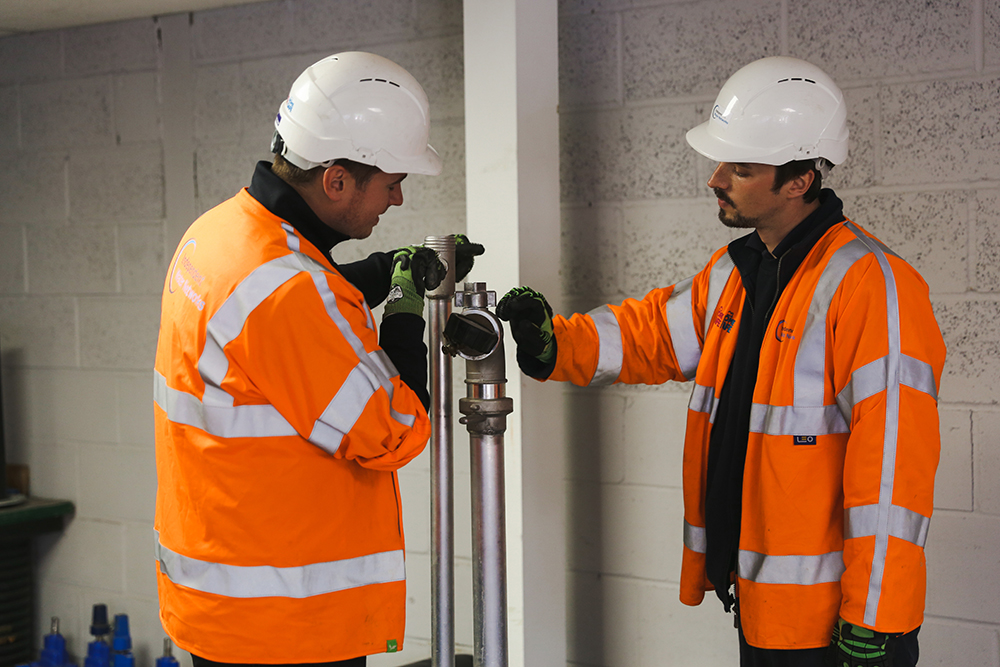
From our perspective at Gold Tap Training, one of the most influential contributors to network performance is workforce capability. Training is not simply about compliance or ticking boxes; it is about equipping people with the understanding and confidence to make effective decisions in complex, real-world conditions.
Take leak detection: data interpretation, acoustic loggers, correlators, and data platforms have transformed how leaks are identified, yet false positives, missed signals, and misinterpretation remain common challenges. Well-trained technicians are better able to understand network behaviour, distinguish background noise from genuine leakage, and prioritise interventions that minimise disruption and water loss. In this way, training directly supports non-revenue water reduction and operational efficiency.
The same principle applies to asset management. Modern asset strategies rely on accurate data, condition assessment, and long-term planning. However, data quality is only as strong as the people collecting and validating it. Training helps teams understand not just how to record information, but why it matters, linking day-to-day operational choices to asset health, risk, and lifecycle cost. This shared understanding supports more consistent decision-making across organisations, from field operatives to planners and managers.
Most critically, training underpins drinking water quality. Protecting public health depends on vigilance at every stage of the network, from treatment through to distribution. When staff understand hydraulic principles, contamination risks, and the consequences of poor practice, they are better placed to prevent issues rather than react to them. Training reinforces a culture where water quality is everyone’s responsibility.
As the sector faces mounting pressures, from ageing infrastructure to climate variability and regulatory scrutiny, the need for skilled, informed people has never been greater. Investment in training is an investment in resilience: enabling the workforce to adapt, apply new technologies effectively, and safeguard the integrity of clean water networks.
In an industry building through innovation, knowledge remains one of our most valuable assets.
Gold Tap Training